Tokyo turns late. The maples in the city's Edo gardens hold from the last week of November into the first days of December, a fortnight later than most first-time visitors plan for, and by then the ginkgo avenues that peak in mid-November have already dropped. Time a trip for the gap between the two and you can have both; book a single week in early November and you will properly catch neither.
Colour is easy enough to find in Tokyo. The problem is that the city's fifteen-odd serious foliage sites peak on a staggered calendar, sit on four different train lines and close on different days. The order below is the one you would actually walk, with the ticket price, the closing time and the group realities attached. The Tokyo guide covers the rest of the itinerary these gardens slot into.
The gold arrives two weeks before the red
Meiji Jingu Gaien Ginkgo Avenue (Gaien, Minato) is a public street, not a garden. There is no gate, no ticket and no closing time: you walk in from either end and keep walking. The Jingu Gaien Ginkgo Festival runs 15 November to 1 December 2026, with 32 food stalls set up along it at ¥500 to ¥1,500 a plate, and evening light-ups from 23 November to 1 December, 16:30 to 19:30.
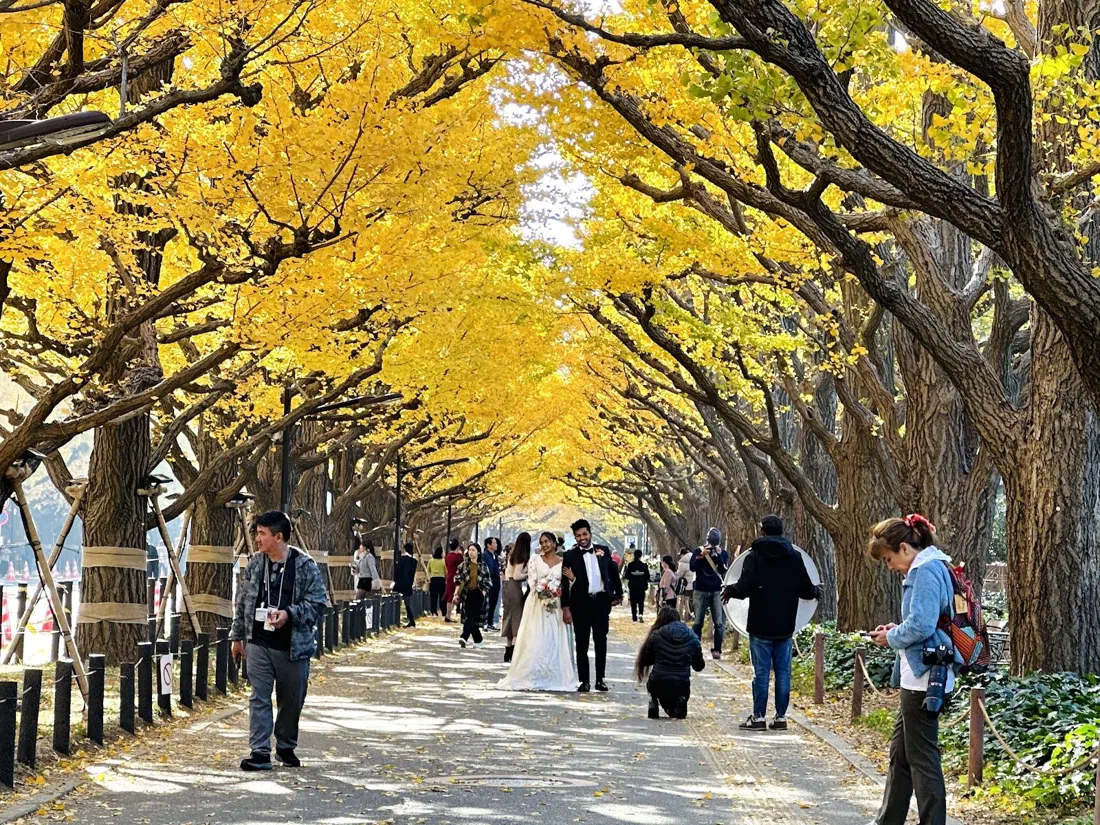
It is also the single most crowded foliage spot in Tokyo at peak. Before 09:00 on a weekday it is a walk. By 11:00 on a Saturday it is a column of people moving at one shared pace, and any group larger than four will lose someone. Go early, agree a meeting point at one end before you start, and do not plan to double back.
Photographs rarely show the redevelopment work going on across the Gaien district. The avenue itself stands, but the surrounding walkways are fenced off in places, which narrows the usable width exactly where the crowd is densest.
Because the ginkgos run roughly two weeks ahead of the maples, your dates decide the shape of the trip. Mid-November arrivals should lead with gold and treat red as a bonus. First-week-of-December arrivals should reverse it and skip the avenue entirely, since by then it is bare.
A half-day around Komagome
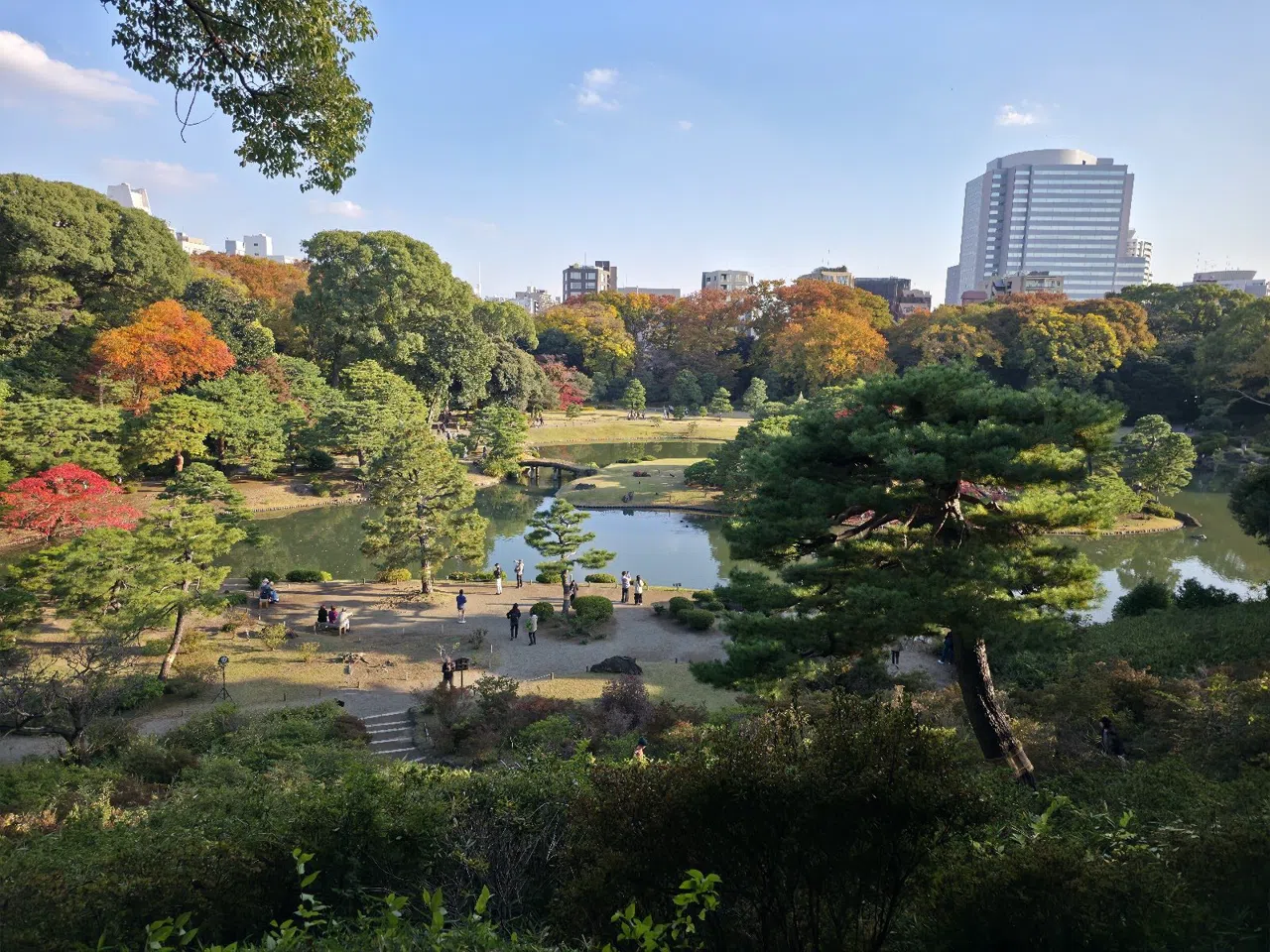
Rikugien Gardens (Komagome, Bunkyo) is the benchmark Tokyo maple garden and the only illumination in the city that justifies the queue. Daytime entry is ¥300, or ¥150 for over-65s, and no booking is needed at any group size; parties of 20 or more get the metropolitan 20 per cent discount at the window.
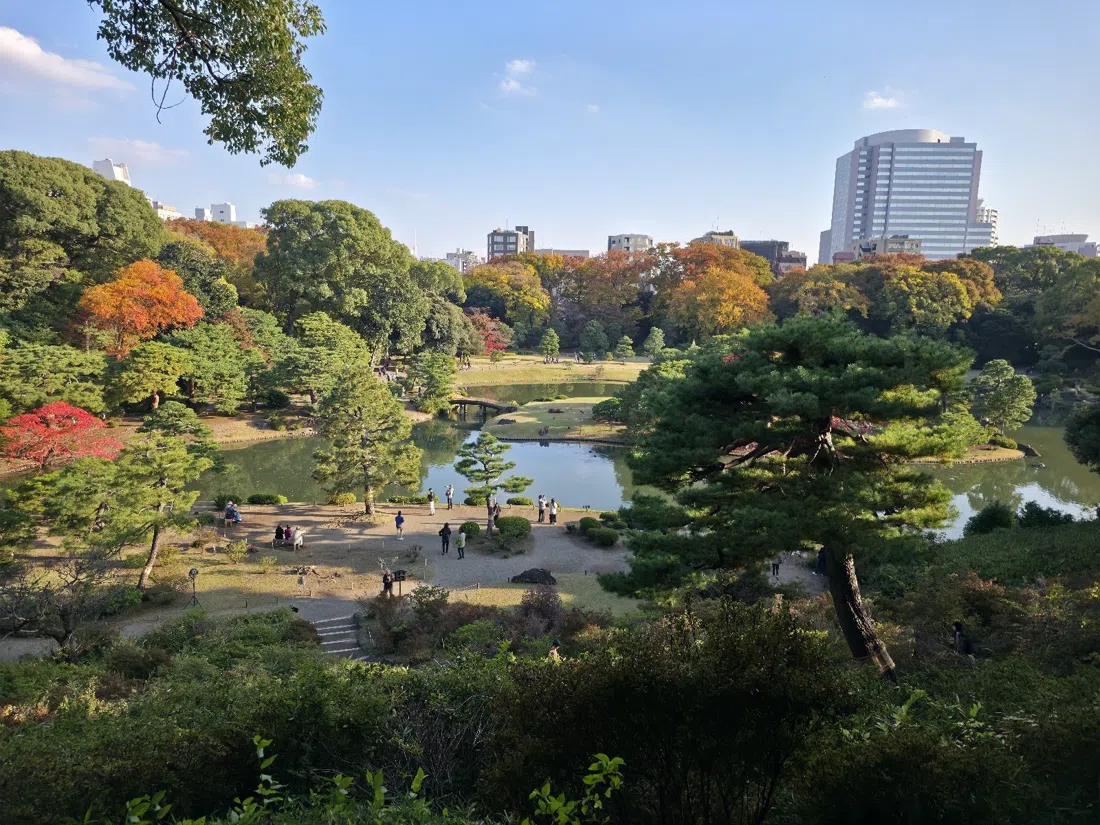
The night viewing runs 25 November to 6 December 2026, 18:00 to 20:30, with last entry at 19:30. Read the times carefully, because the garden closes at 17:00 and reopens at 18:00, so you cannot sit inside through the changeover. Treat the evening as a separate trip rather than the tail end of an afternoon. Tickets are timed and capped at a fixed number per day: ¥1,000 booked online in advance, ¥1,200 same-day in cash. A group of twenty turning up at 18:15 hoping to buy at the gate will go home.
Ten minutes on foot brings you to Kyu-Furukawa Gardens (Nishigahara, Kita), which pairs a Western mansion and terraced rose beds with a Japanese garden dropping away below it. Autumn roses on the terrace and maples turning underneath run from mid-November into early December, and garden admission is ¥150, the best-value ticket on this list. The mansion interior is a separate guided tour at roughly ¥400 extra and must be booked in advance; the garden needs nothing.
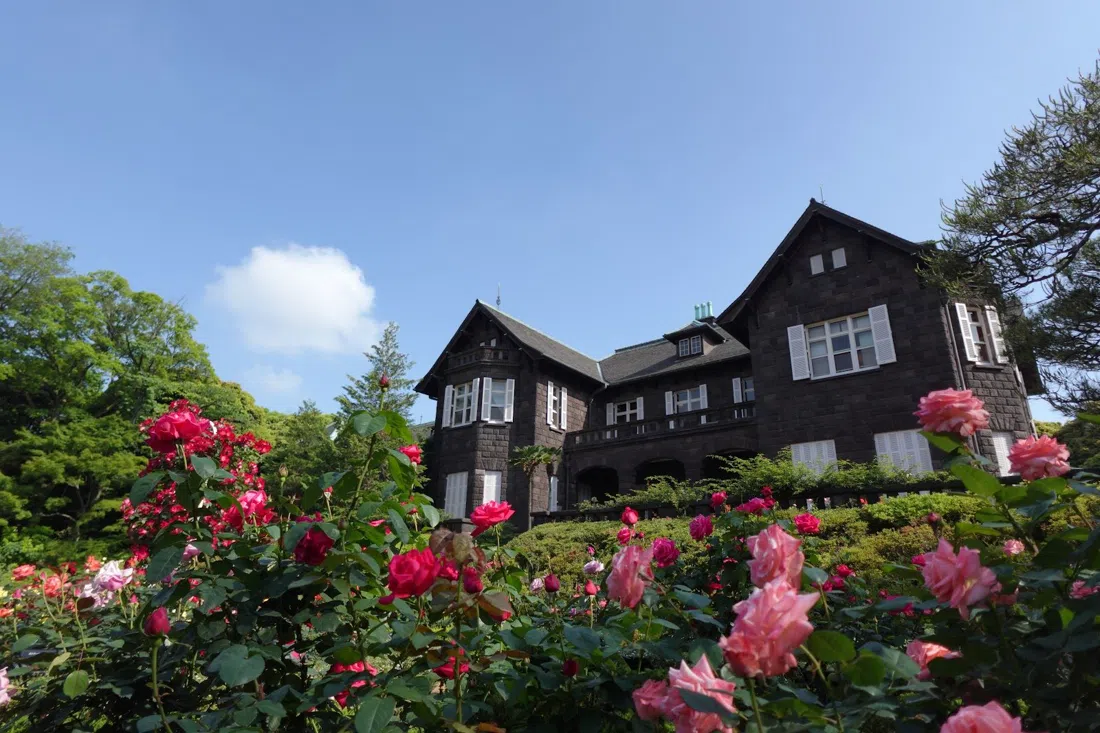
The site is small. Twenty people get the discount but feel the walls; two or four people get the best of it. The two gardens together make a clean half-day, and there is no reason to split them across separate trips.
One hour between Iidabashi and Korakuen
Koishikawa Korakuen Gardens (Koraku, Bunkyo) is Tokyo's oldest surviving Edo garden and the best 60-minute foliage stop in the city centre. Dozens of maples ring three ponds, peak is late November into early December, and entry is ¥300, or ¥150 for over-65s, with 20 per cent off for 20 or more.
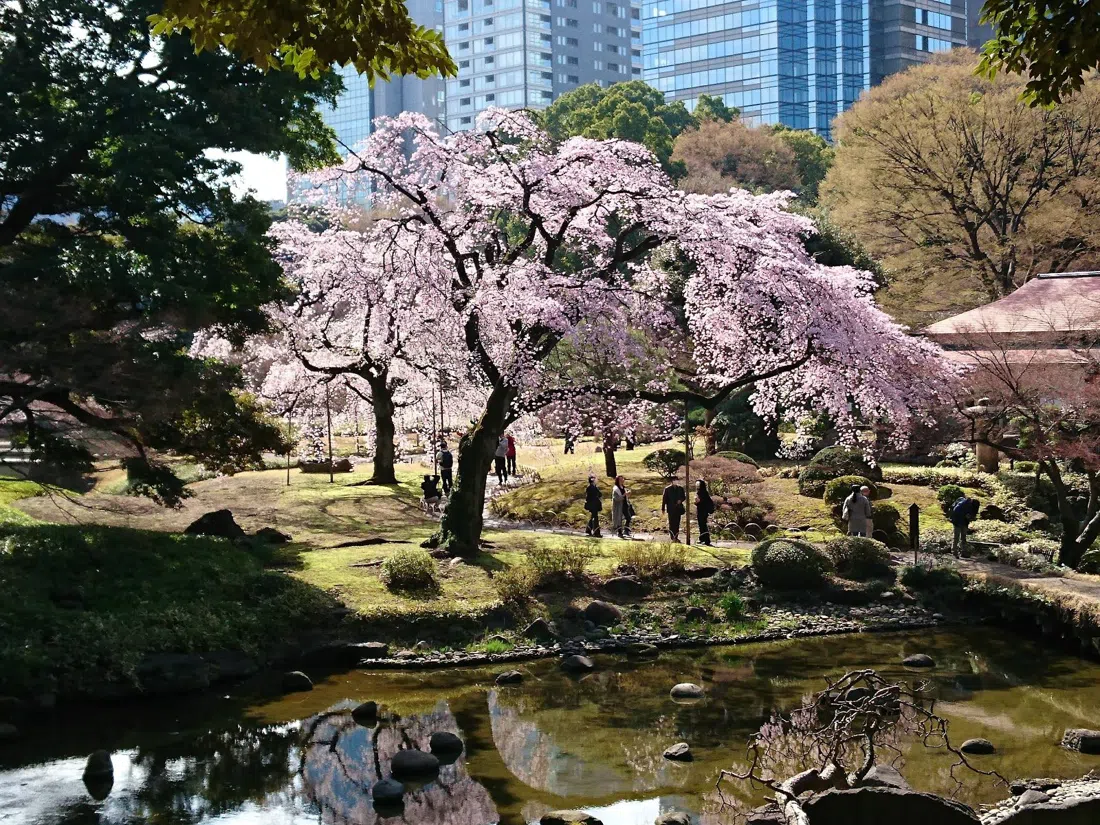
It sits two minutes from both Iidabashi and Korakuen stations, which is why it fits into almost any day without rearranging one. There is a single main gate. Meet your party outside it rather than agreeing to find each other inside, because the paths loop and you will not.
What still has colour in December
Shinjuku Gyoen National Garden (Shinjuku) holds the latest colour in central Tokyo. The maples on Momijiyama typically run from the last week of November into the first ten days of December, which makes it the reliable fallback for anyone who arrives after the mid-November wave has gone. Entry is ¥500, ¥250 for students and over-65s, free under 15.
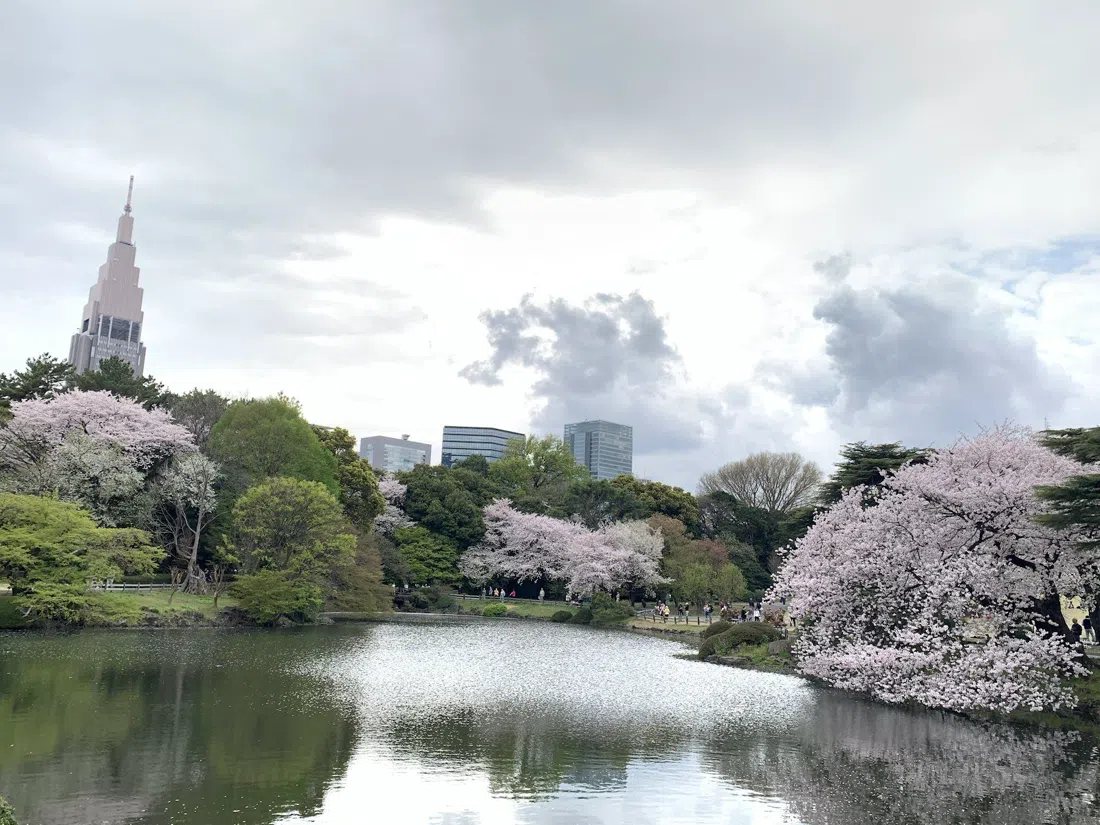
It closes at 16:30, closes entirely on Mondays, and has no evening opening at all, so it is a daytime anchor and never an after-dark one. Three wide gates at Shinjuku, Okido and Sendagaya let you enter from whichever line you arrived on, and there is enough ground here to absorb a coach party without anyone feeling herded. Groups get caught out by one rule: no alcohol and no sports equipment inside. Picnic kit that would pass in a park will be turned back at the gate.
Koishikawa Botanical Garden (Hakusan, Bunkyo) belongs to the University of Tokyo and turns later than anything else here. Colour often holds into mid-December, well past the point where the central gardens are bare. Sixteen hectares and 4,000 species mean it stays quiet even at peak. Entry is ¥500, or ¥150 for school students; closed Mondays, open 09:00 to 16:30 with last entry at 16:00.
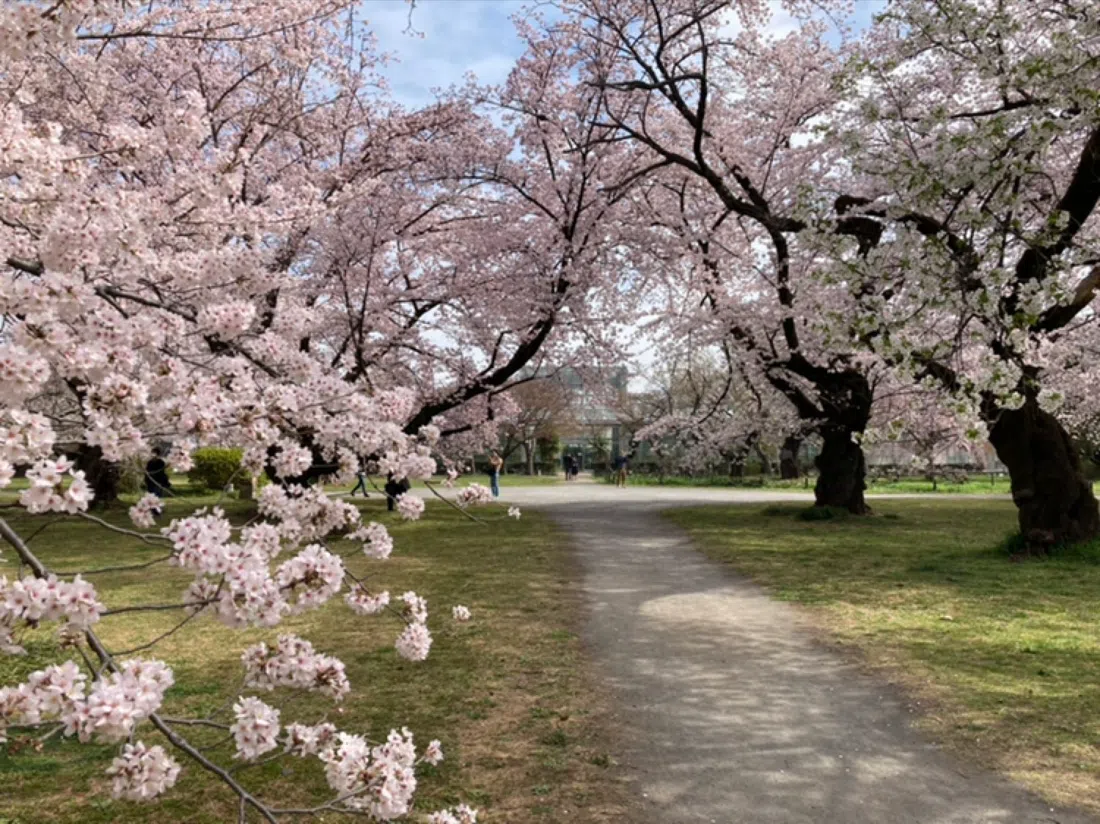
Treat it as an academic institution rather than an attraction. Keep to the paths and off the beds, and understand that there are effectively no facilities: no stalls, no café worth the name. Brief a group before arrival rather than at the gate.
Institute for Nature Study (Shirokanedai, Minato) is nothing like the raked gravel elsewhere in this article. It is 20 hectares of genuinely untended woodland, eight minutes from Meguro station, where the colour arrives messy and late. Entry is ¥320, cash only, and free for under-18s, high-school students and over-65s.
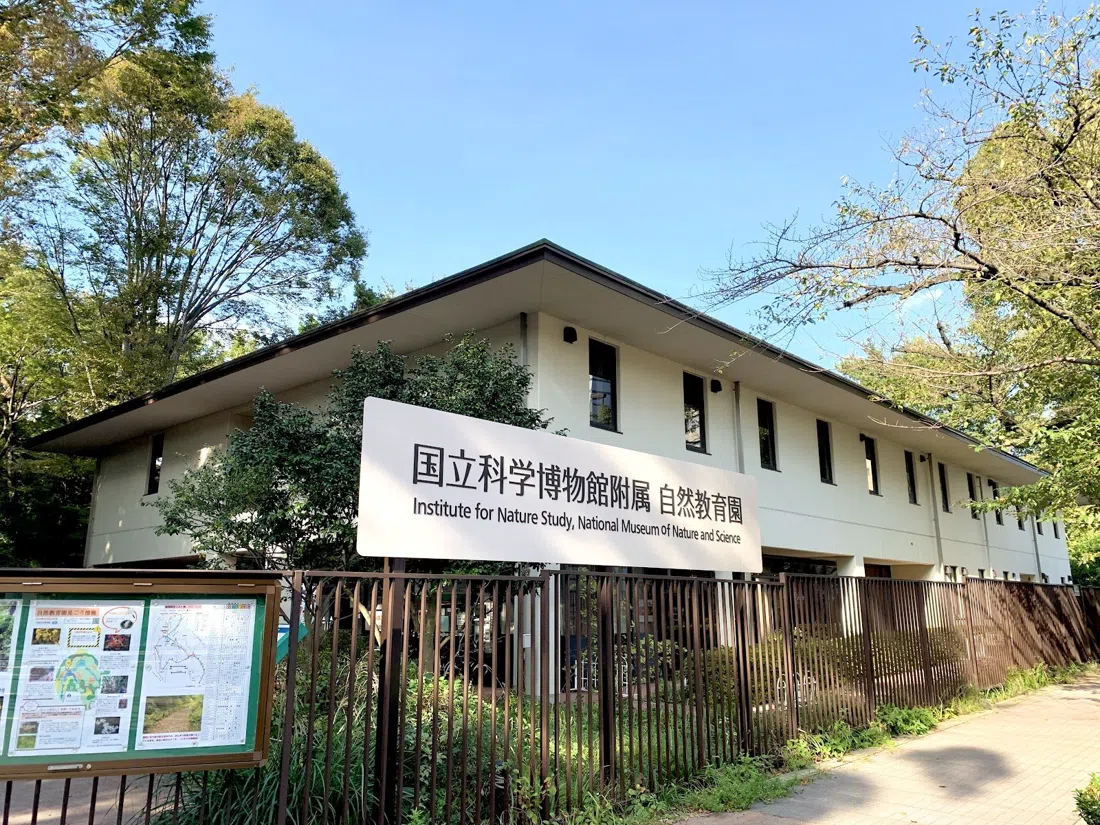
Daily visitor numbers are capped to protect the habitat, so a large party can simply be turned away at a busy hour. Split into groups of four or five and arrive separately. Paths are narrow and unpaved in stretches, so wear something you can walk mud in. Closed Mondays and the day after public holidays; open 09:00 to 16:30 from September, last entry 16:00.
Two gardens on the water
Hama-rikyu Gardens (Hamarikyu, Chuo) is worth it for the arrival as much as the colour. The Tokyo Cruise boat from Asakusa docks at a pier inside the garden, so the transfer becomes the sightseeing, at around ¥1,180 one way including admission. Walking in at the gate instead costs ¥300, or ¥150 for over-65s.
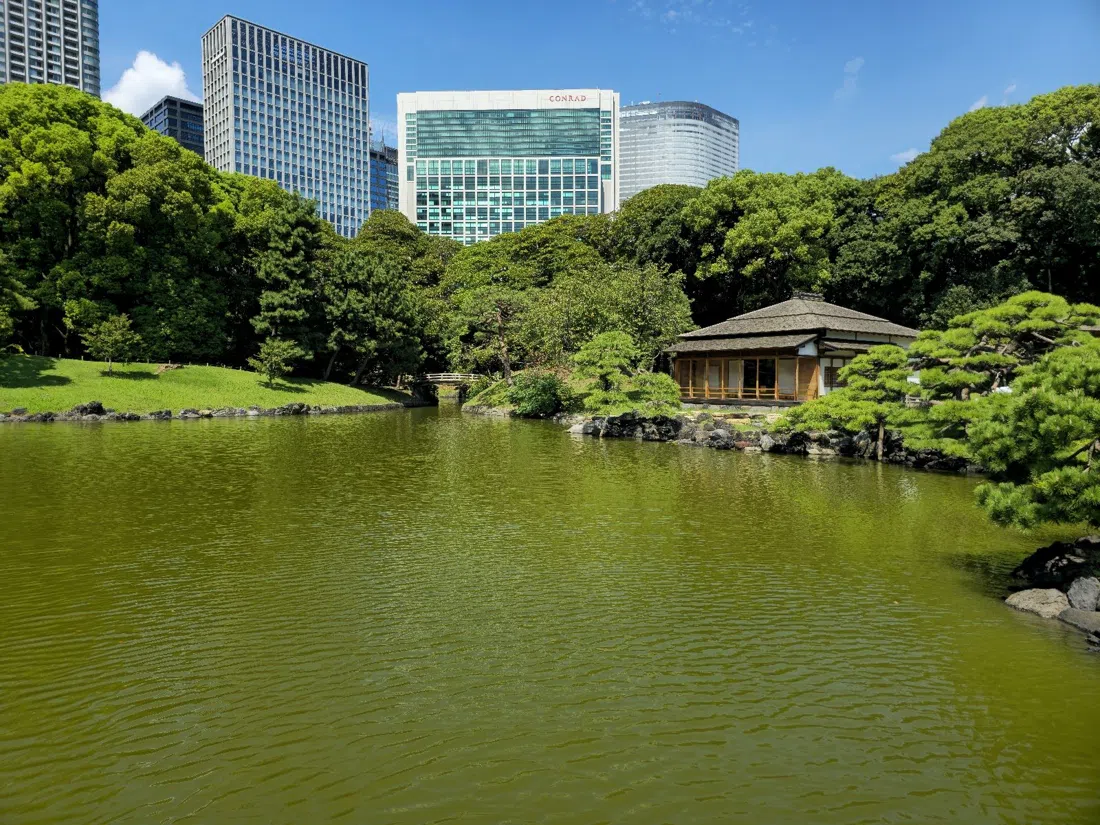
Maple, ginkgo and Japanese red maple turn against the old pines from late November. The garden is large and flat and takes a coach group comfortably, with 20 per cent off at 20 or more. The teahouse is the constraint: matcha and a sweet run about ¥1,000 and seating is limited, so split a group across two sittings rather than queuing as one block. Check the boat timetable on the day you travel, because sailings change.
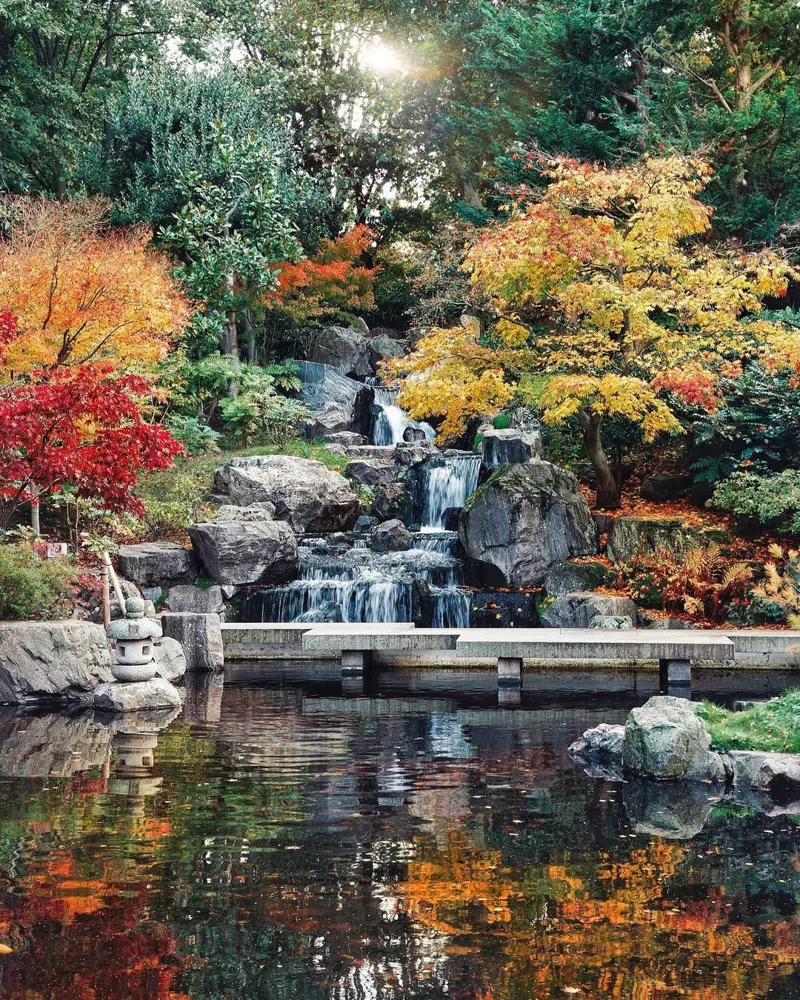
Kiyosumi Gardens (Kiyosumi-Shirakawa, Koto) is the cheapest ticket in Tokyo for a first-rank garden at ¥150, or ¥70 for over-65s. The autumn here is maples and camellias rather than a mass display, but the stone collection makes it worth an hour even under flat grey cloud. The stepping-stone crossing over the pond is single file and slippery after rain; route anything larger than a handful of people round the bank instead and let couples take the stones. The coffee roasters and galleries of Kiyosumi-Shirakawa are two minutes away, which makes this the easiest garden on the list to build a whole afternoon around.
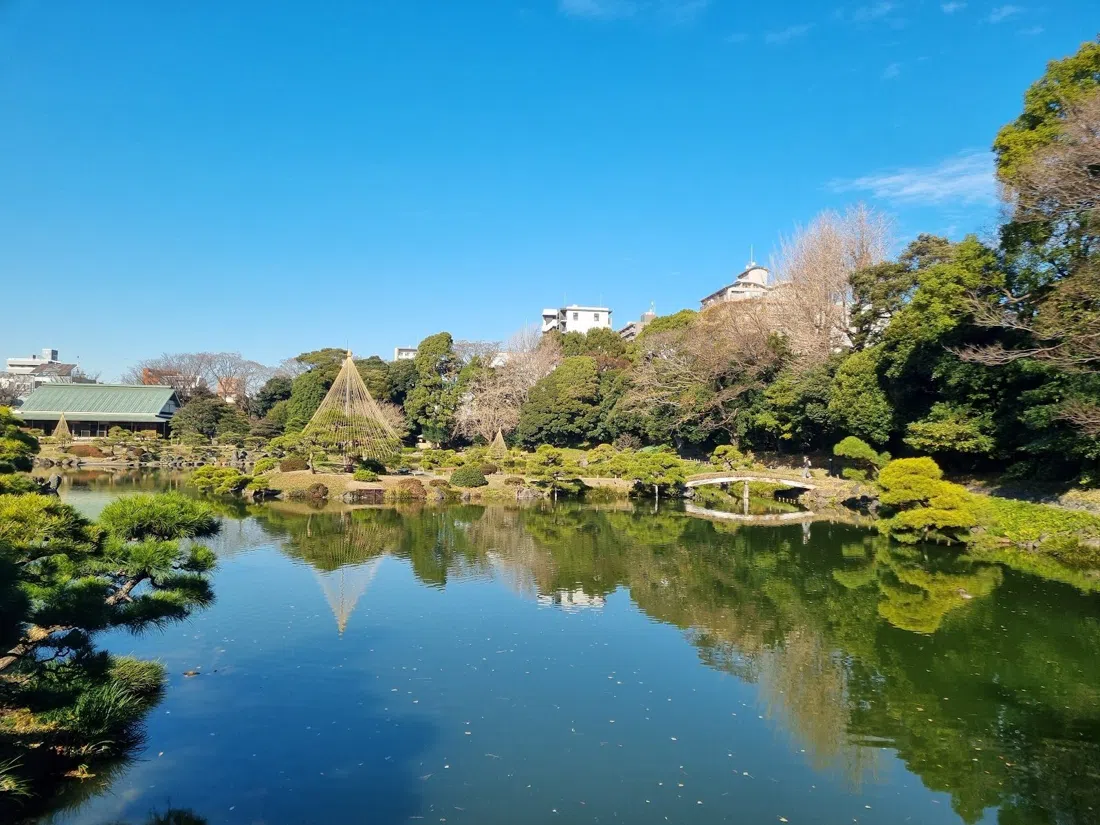
Where the garden comes with a meal
Happo-en (Shirokanedai, Minato) is the best free garden in central Tokyo and sits directly opposite Exit 2 of Shirokanedai station. Its autumn leaves period runs roughly 10 November to 10 December. There are three restaurants, a formal Japanese restaurant and bookable tea-ceremony sittings, with tea and café from around ¥1,500 and restaurant lunches from ¥5,000. It was built for groups, being primarily a wedding and banquet venue, and that is also the trade-off: sections of the garden close off for private events and nobody warns you in advance. Combine it with the Institute for Nature Study, a short walk away in the same district.
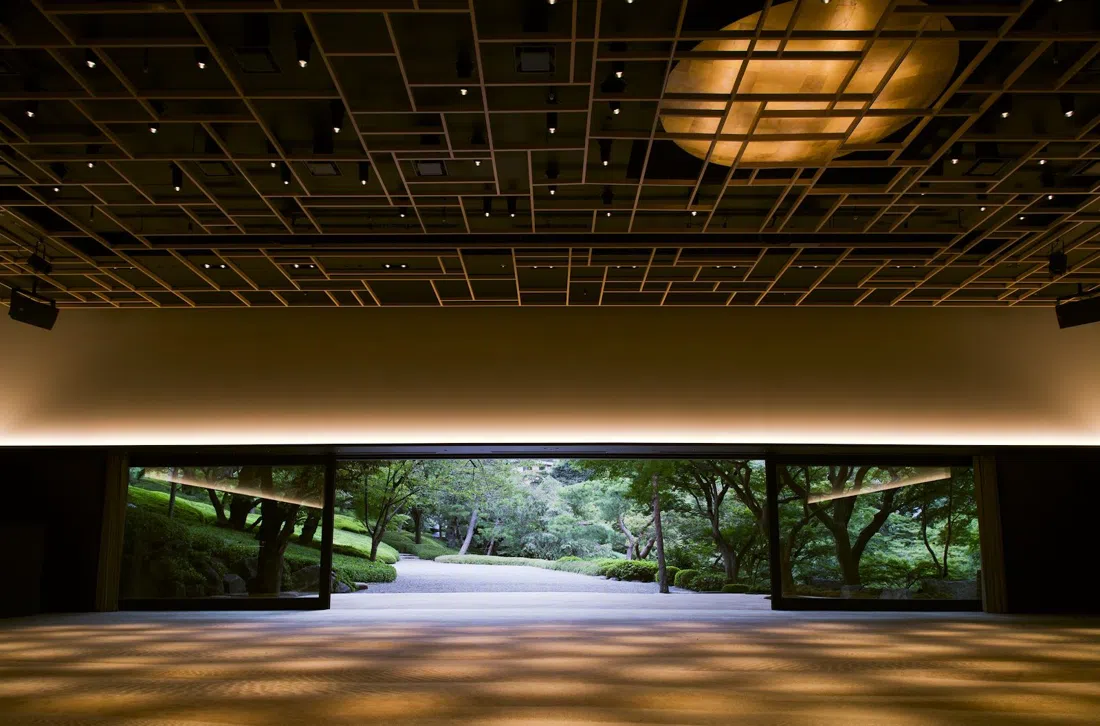
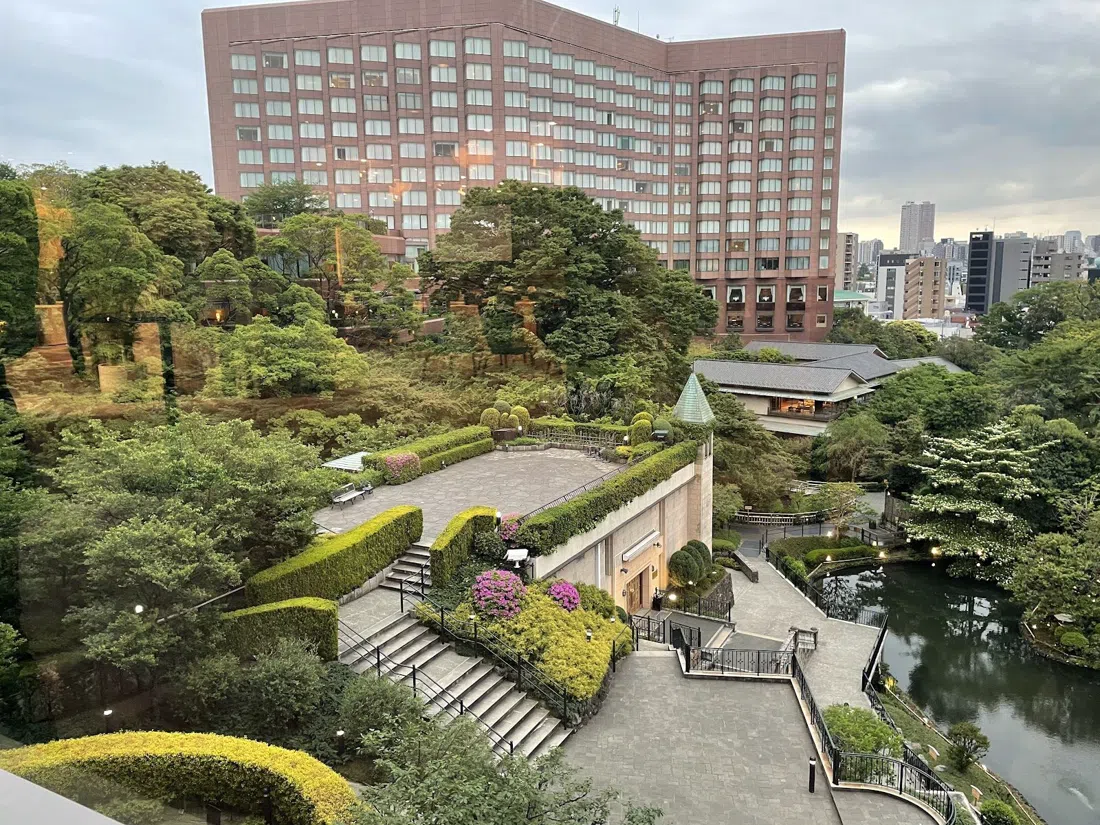
Hotel Chinzanso Tokyo Garden (Sekiguchi, Bunkyo) is a genuine 400-year-old hillside garden where the colour peaks late, end of November into early December, and where the mist effect, relaunched as Tokyo Sea of Clouds -YAKUMO- on 1 July 2026, is the actual reason to come. Access is the catch, and it has changed: the garden is no longer free to the general public, and entry now requires staying, dining or shopping at the hotel. Book a restaurant table first, from around ¥5,000 at lunch. Do not walk to the gate expecting to be let in.
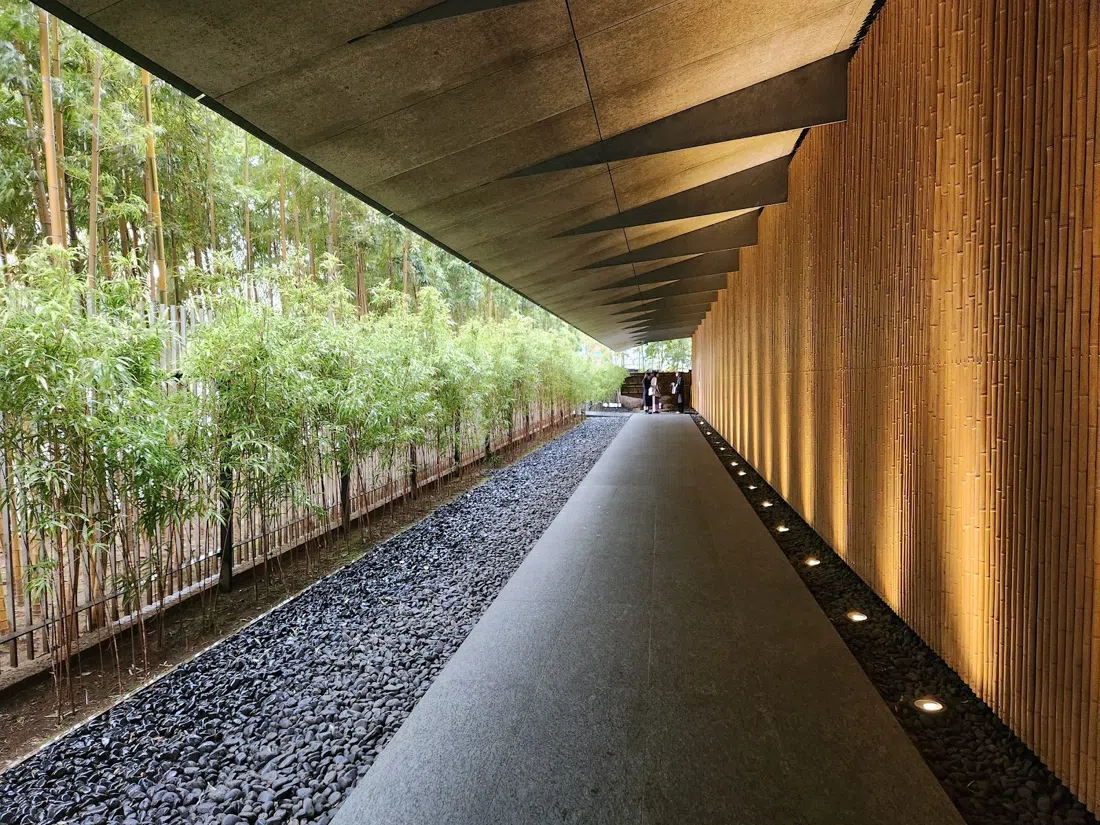
Nezu Museum (Minami-Aoyama, Minato) is the only stop here that is a serious museum of Japanese and East Asian art as well as a hillside garden, and admission includes both the garden and the café: ¥1,300 for special exhibitions, ¥1,100 for the collection. Timed-entry online booking is strongly advised and weekend walk-up tickets often sell out, so a group must book together and ahead. Closed Mondays, open 10:00 to 17:00 with last entry at 16:30. It is eight minutes from Omotesando, which puts it neatly between Aoyama and the Gaien ginkgos on the same afternoon. The garden paths are steep and narrow: excellent for two, awkward for twenty.
Night viewing without the scrum
If you want one illumination and can plan ahead, make it Rikugien. If you want one you can reach on a whim, make it Ōtaguro Park (Ogikubo, Suginami), the former home of the music critic Motoo Ōtaguro, left to the ward in 1979 and lit from late November into early December, Monday to Thursday 17:00 to 20:00 and Friday to Sunday 17:00 to 21:00. It is free by day and ¥300 in the evening, ¥100 for school age and under, ten minutes from Ogikubo.
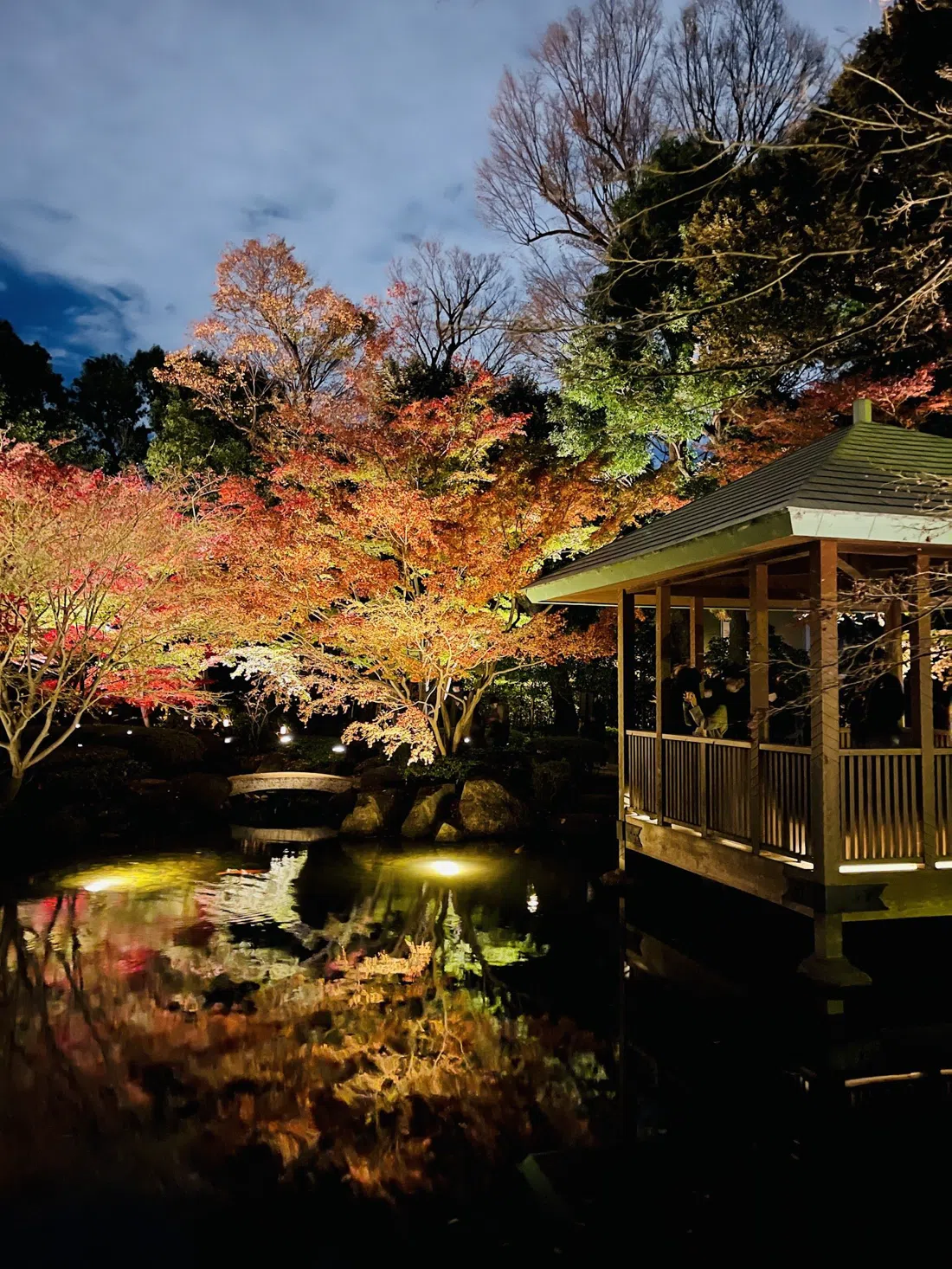
The scale is small. This is a ward garden where a dozen people is the sensible ceiling, and a coach party swamps it. The evening admits limited numbers and a queue does form at the gate, but it moves, which is more than can be said for the central sites at peak.
Out on the Chuo line
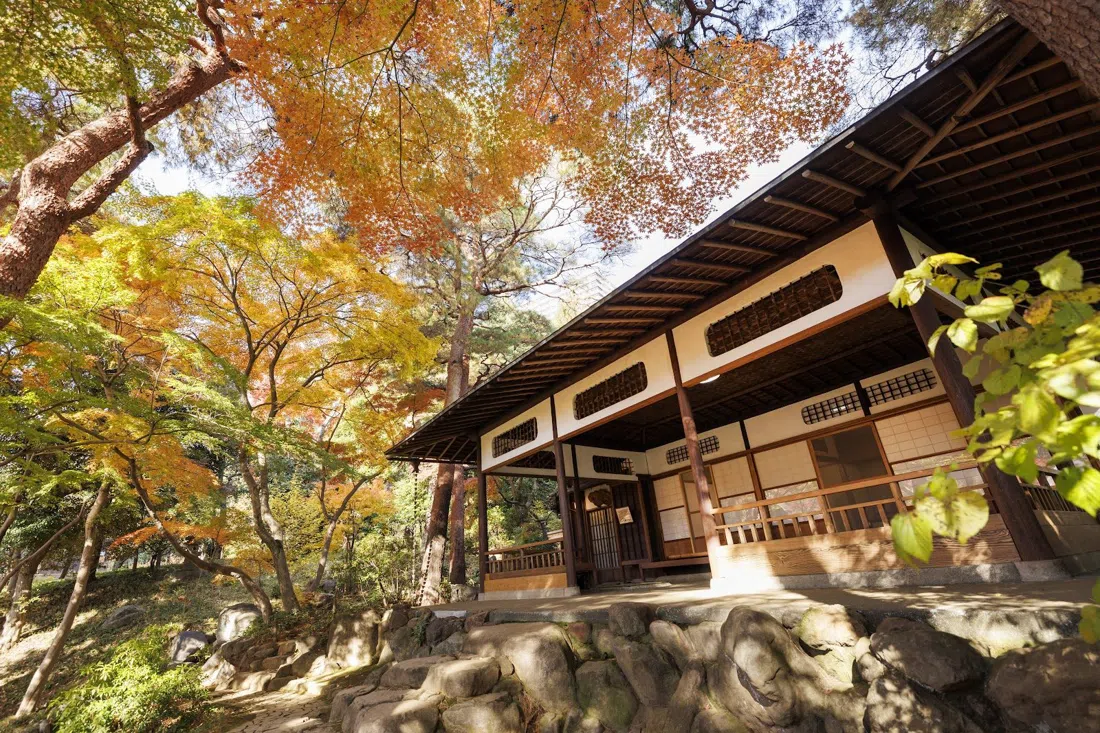
Tonogayato Gardens (Kokubunji) is the only genuinely easy western-Tokyo garden, two minutes from Kokubunji station on the Chuo line. The ravine holds moisture, so the maples turn deep and late, November into early December. Entry is ¥150, or ¥70 for over-65s; open 09:00 to 17:00, last entry 16:30. The entrance is narrow and the garden is small: good for a party under about fifteen, and while the 20 per cent metropolitan group rate technically applies at twenty, the site will feel crowded at that size.
Showa Kinen Park (Tachikawa) is the big day-trip option and the most group-capable site in this article, with 165 hectares, multiple gates, rental bicycles, cafés and full facilities, thirty minutes from Shinjuku to Tachikawa. Entry is ¥450 for adults, ¥210 for over-65s, free for junior high and younger. There are two distinct ginkgo avenues plus maples in the Japanese garden, and an evening light-up that needs a separate ticket and has historically run from late October to late November. The park is operating normally in 2026 (its Cosmos Festival ran 12 September to 25 October), but the light-up dates are published in autumn, so check the park's own site before committing an evening to it.
Practical notes
There are three windows and they barely overlap. 15 to 25 November is ginkgo season: the Gaien avenue, the Showa Kinen avenues, the first maples at Kyu-Furukawa and Happo-en. 25 November to 6 December is the main event: Rikugien day and night, Koishikawa Korakuen, Shinjuku Gyoen, Hama-rikyu, Tonogayato, Chinzanso. From 6 December the central gardens thin out fast and you fall back on Shinjuku Gyoen's Momijiyama, Koishikawa Botanical Garden and the woodland at the Institute for Nature Study, which hold into mid-December.
Shinjuku Gyoen, Koishikawa Botanical Garden, the Institute for Nature Study and the Nezu Museum all close on Mondays; the Institute also closes the day after a public holiday. The metropolitan gardens (Rikugien, Koishikawa Korakuen, Kyu-Furukawa, Kiyosumi, Hama-rikyu, Tonogayato) stay open, so build a Monday out of those.
The Institute for Nature Study takes cash only, and same-day Rikugien night tickets are cash at ¥1,200. Carry ¥5,000 in small notes and coins for gates and teahouses even if you pay for everything else with a card.
On budget, the metropolitan gardens cost ¥150 to ¥300 each, so three of them in a day comes to under ¥1,000 including the ticket at Shinjuku Gyoen. Add ¥1,000 for a Rikugien night ticket booked online, ¥1,100 to ¥1,300 for the Nezu Museum, about ¥1,180 for the Asakusa boat to Hama-rikyu, and roughly ¥1,000 for matcha and a sweet at a teahouse. A serious four-day foliage itinerary lands around ¥6,000 to ¥8,000 in admissions per person, which is less than one restaurant lunch at the hotel gardens.
Twenty or more gets 20 per cent off at every metropolitan garden, but size helps you at only three sites: Shinjuku Gyoen, Hama-rikyu and Showa Kinen. Everywhere else, split up. Kyu-Furukawa, Tonogayato, Ōtaguro Park, the Nezu garden and the Institute for Nature Study all punish a large party, and the Institute will turn one away outright at a busy hour.
Bunkyo and the Yamanote's northern arc put you within twenty minutes of Rikugien, Kyu-Furukawa, Koishikawa Korakuen and the botanical garden, which is the densest cluster of good colour in the city; Shinjuku trades that for the Chuo line and a short walk to Shinjuku Gyoen. Compare both on the Tokyo hotel search before you fix dates, because late November fills early.