At 19:00 on a Wednesday the west face of the Tokyo Metropolitan Government Building in Nishi-Shinjuku turns into a moving image the height of a residential block, and nobody at the barrier has paid a yen. Ten kilometres east, in a dark hall in Toyosu, several hundred people stand shin-deep in warm water holding their shoes. Tokyo is the only city where immersive light art is both the hardest ticket in the country and a free civic fixture. That split is not one studio's doing. It comes out of thirty years of corporate and public money paying artists to build rooms like these.
Treat the two teamLabs as two separate days
The usual mistake is to assume there is one teamLab museum with two branches. There are two museums, at two addresses, with different artworks in each. Doing both in one day means two fixed timed slots on opposite sides of the bay and a rushed hour in each.
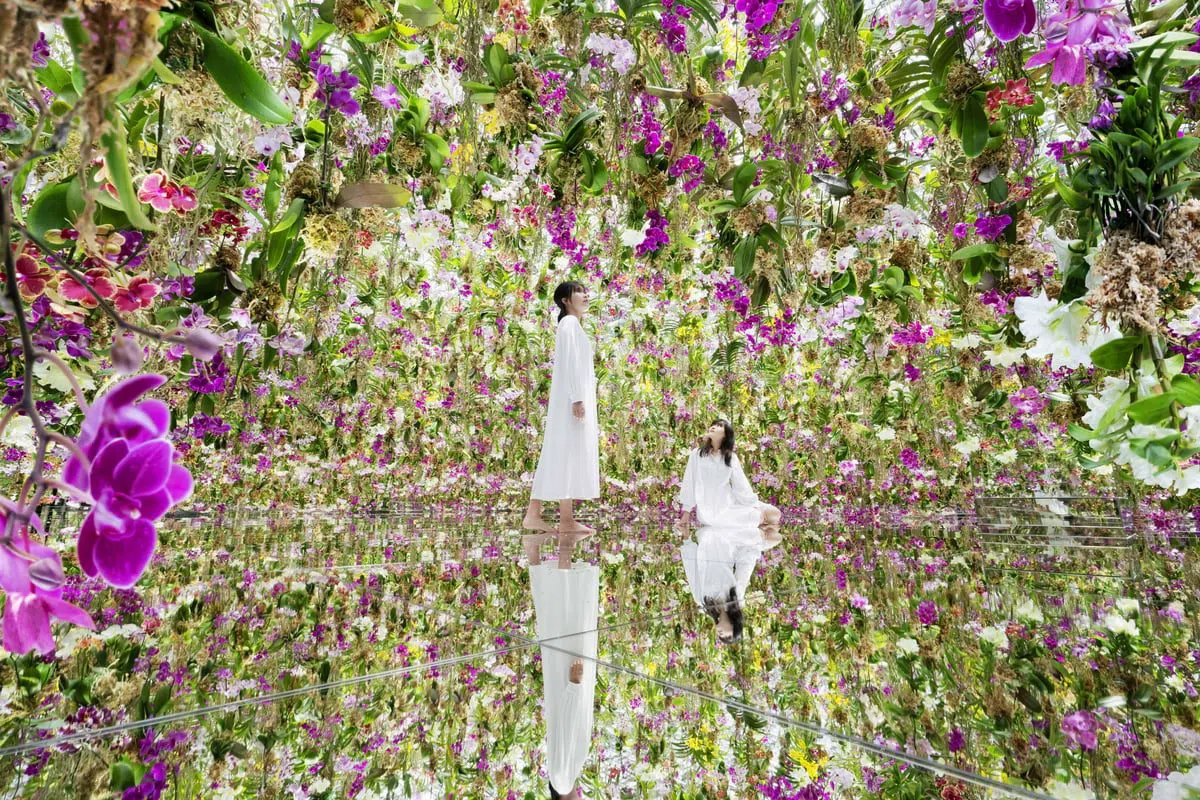
teamLab Planets TOKYO DMM (Toyosu) is the water one, and the one to book first if you only book one. Entry is strictly timed and sold online in advance, with a separate group and agent channel for parties of ten or more. Everyone goes barefoot and several rooms hold water to knee height, so the real dress code is shorts or trousers you can roll above the knee. There are lockers and loaner shorts on site, but the loaner queue eats into your slot. Adult tickets run ¥3,200 to ¥4,800 depending on the date. The January 2025 expansion added the Forest zone, including the Athletics Forest and the Catching and Collecting Forest, and grew the site by about half again, so budget two hours rather than ninety minutes. Two warnings. Wet, dark, uneven floors make this a poor choice for anyone unsteady on their feet. And the museum is scheduled to close permanently at the end of 2027, so if it is on your list at all, it belongs on this trip.
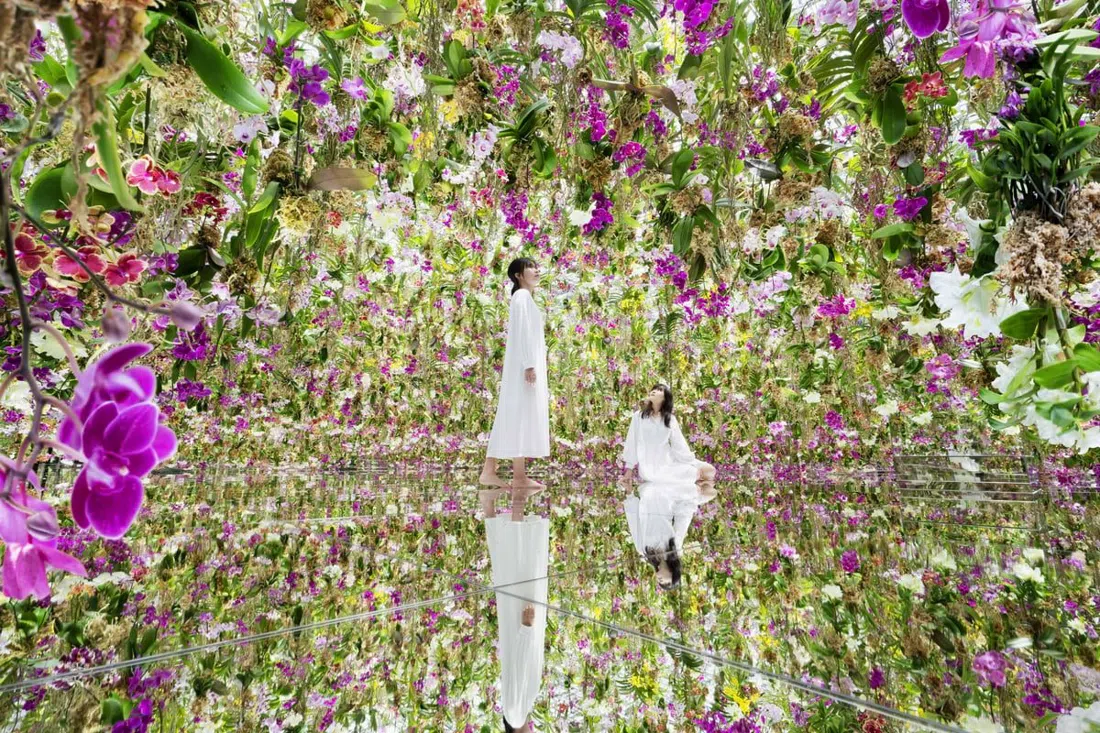
teamLab Borderless (Azabudai Hills, by Kamiyachō) is a different museum rather than a variant of the first: no water, different works, and a layout built to disorient you. It reopened at Azabudai Hills in February 2024 after the original Odaiba site closed, and had passed four million visitors by the middle of 2026. The Light Sculpture – Flow room came back in July 2026 with two new series. Tickets are ¥3,600 to ¥5,600 by date, all timed, and weekend slots go weeks ahead, so buy direct from the official page where you can see live availability. Groups are fine here, but agree a meeting point and a time before you walk in. Parties lose each other inside as a matter of routine, and there are no sightlines to find anyone from.
Pair Planets with Ariake in one half-day and Borderless with Roppongi in one evening, and the transit does the work for you. The rest of the city's geography is laid out in our Tokyo guide.
Where the mirrored infinity room actually came from
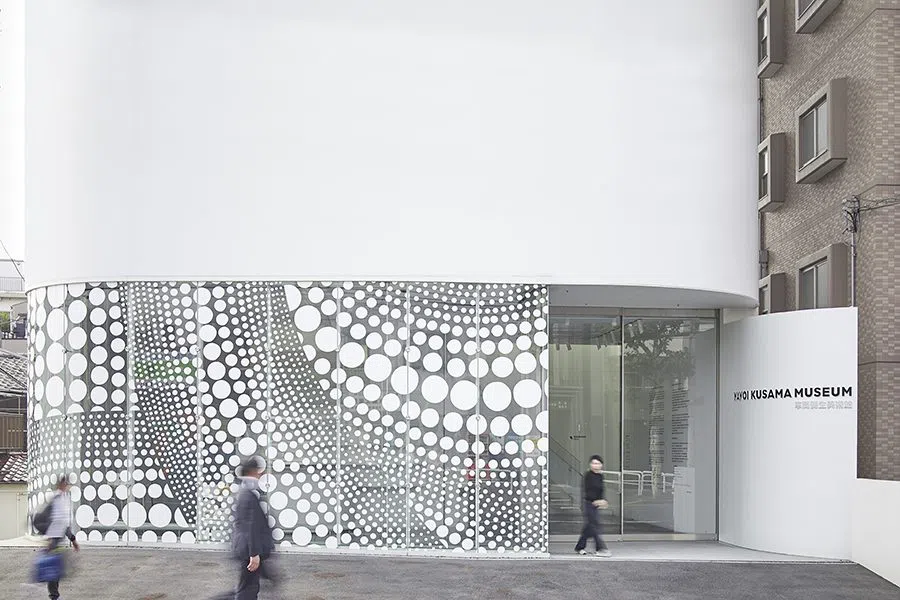
Yayoi Kusama Museum (Shinjuku, a quiet residential block near Ushigome-Yanagichō) is a bad fit for groups and a necessary stop for everyone else. The building is small, entry is a strict 90-minute slot, and tickets are sold online only, released on the 1st of each month roughly two months ahead, so book in the hour the window opens. It opens Thursday to Sunday, at ¥1,100 adult and ¥600 for ages 6 to 18. It has been closed between exhibitions since 31 August and reopens on 8 October 2026 with a show built around light in Kusama's work, running to 31 January 2027. Kusama died in August 2026 at the age of 97, and the museum is continuing to its published programme. Nothing in here is digital, which is the point: the mirrored infinity room that teamLab and everyone after them built on started in her studio.
Mori Art Museum (Roppongi Hills, 53rd floor) needs a date check before anything else, because it is closed from 24 September to 30 October 2026 between exhibitions. It reopens on 31 October 2026 with 'Mariko Mori: All That Shines', running to 28 March 2027. Mori was fusing video, technology and futurism into walk-in installation a full generation before teamLab existed, which makes this the best historical frame you can get for the rest of the list. Admission is roughly ¥2,000 to ¥2,500, there is no timed entry for general admission, and it stays open until 22:00 most nights. That is unusually late, and the easiest way to slot a museum into an evening. Combined tickets with the observation deck are sold at the same desk.
NTT InterCommunication Center (ICC) sits in Tokyo Opera City Tower in Nishi-Shinjuku, directly above Hatsudai Station on the Keio New Line. Entry is ¥800 adult and ¥600 students, some spaces are free, there is no advance booking for general admission, and it closes on Mondays. NTT has been commissioning media art here since 1997, decades before any of this was photogenic, and the place shows it: compact galleries, no gift-shop spectacle, wall text that assumes you can read. Small groups only in practice, and the anechoic chamber takes a handful of people at a time by sign-up on the day. 'ICC Annual 2026', on the entanglement of media, memory and history, runs to 8 November 2026. Come here if you want the ideas rather than the mirror selfie.
What opened in 2026
MoN Takanawa: The Museum of Narratives opened on 28 March 2026, and almost no international guidebook carries it yet. It is 29,000 m² of galleries, halls and public space wired straight into the station concourse, so a party of thirty moves through it without friction. Public areas are free. Individual shows and live pieces are ticketed separately at roughly ¥1,500 to ¥4,000 and should be booked ahead. Programming is narrative-and-technology led and runs as a rolling schedule rather than a permanent collection, so check what is actually on before crossing the city for it. 'Animmersive Live: LAYRA inspired by BELLE' runs 10 October to 15 November 2026.
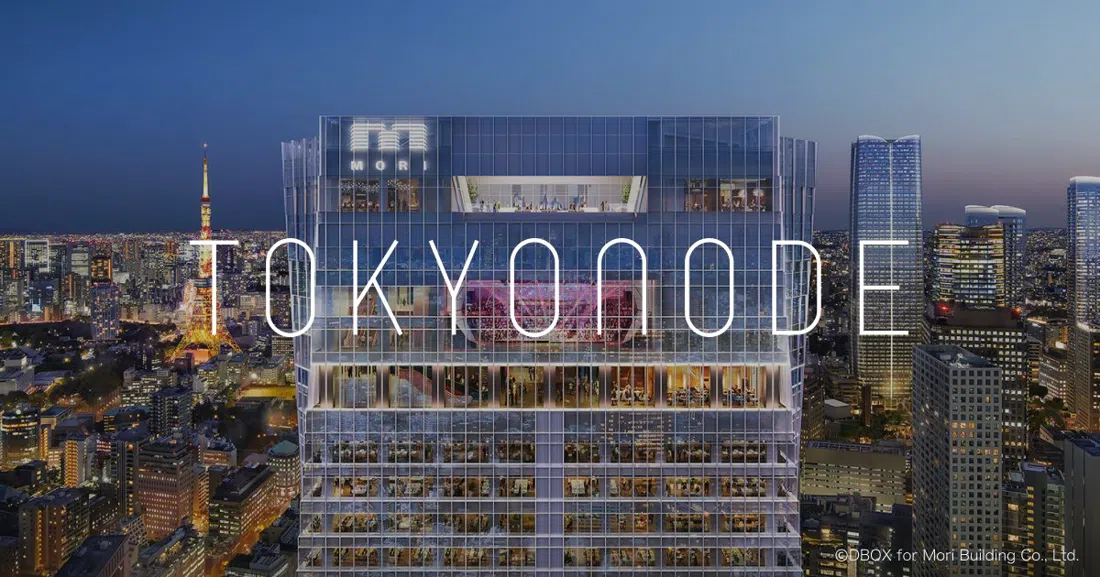
TOKYO NODE (Toranomon Hills Station Tower) is Mori Building's media-art venue and the most credible address in Tokyo for large-scale contemporary work in the form. Expect roughly ¥2,000 to ¥3,500 per exhibition, frequently timed. There is no permanent collection: YOSHIROTTEN's career-largest solo show, 'Communication with the Other Side / BEYOND EARTH', runs 30 October 2026 to 11 January 2027, following Tony Oursler over the summer. Festival programmes sometimes take over floor 8 and floors 45 to 49 at the same time, which is a long vertical walk, so allow for lift queues between the two halves. It doubles as an event venue, so industry-sized groups are routine and the staff are used to them.
Two of the best cost nothing
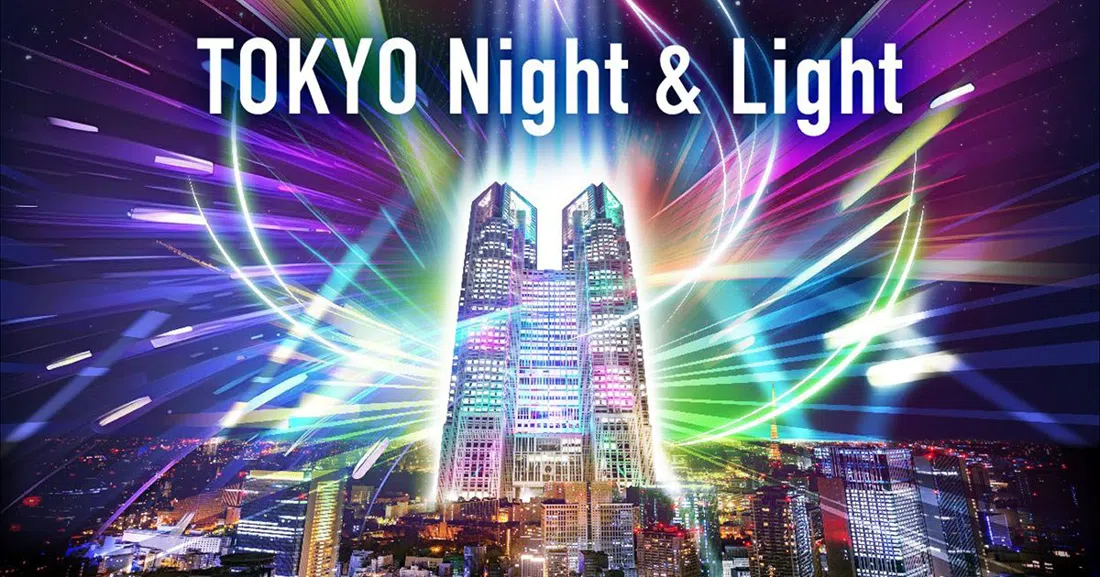
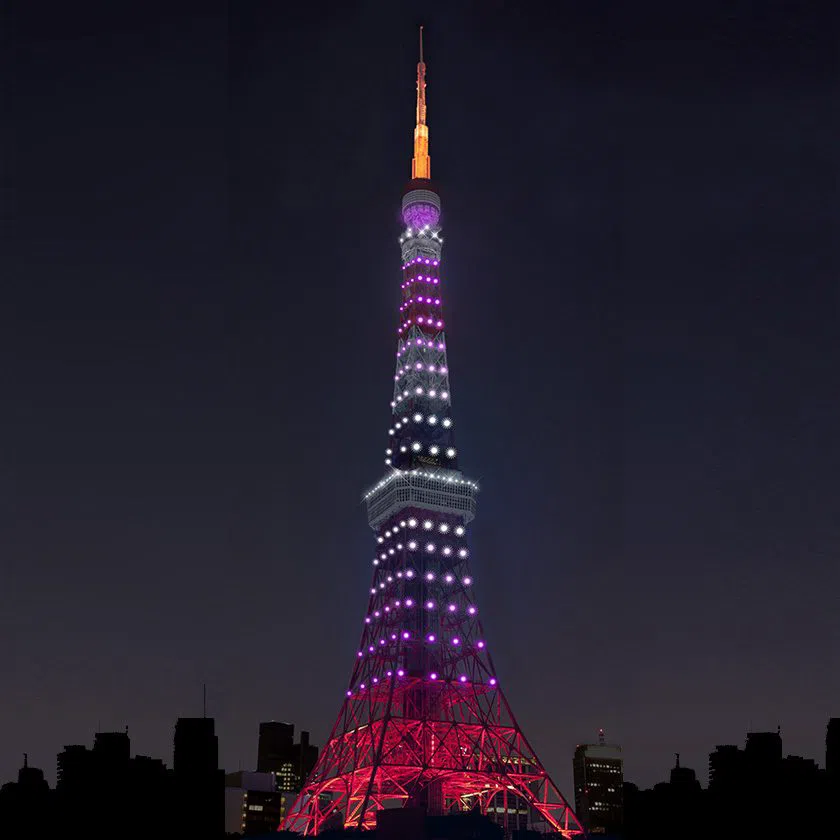
TOKYO Night & Light (Nishi-Shinjuku) is the strongest group option in this piece: outdoors, free, no booking, no capacity limit, about ten minutes on foot from Shinjuku station. Multiple shows run nightly from roughly 18:30 to 21:30, and the programme was still running through autumn 2026. It holds a Guinness-recognised record for the largest projection-mapped surface, and the content rotates, including major IP tie-ins, so a repeat visit a month later is not the same show. Stormy weather cancels it, which is the only planning risk. More than anything else here, it is the argument that Tokyo treats digital art as civic infrastructure rather than a ticketed attraction.
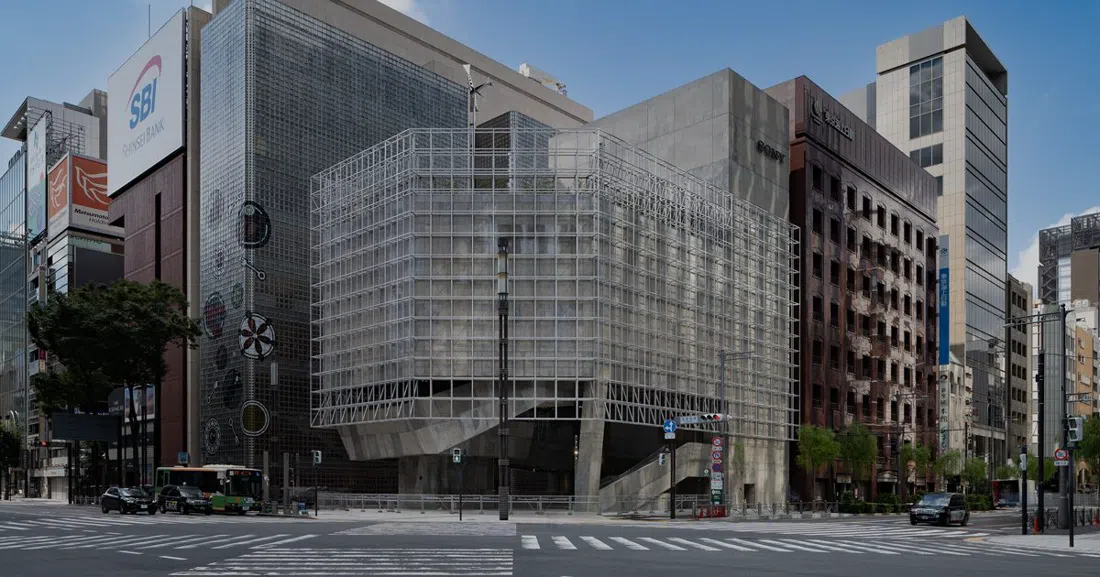
Ginza Sony Park reopened on 26 January 2025 on the footprint of the old Sony Building, at the Sukiyabashi end of Ginza, and free entry in that district is rare. It has kept a rolling programme of commissioned interactive installations, the launch series built with Vaundy, YOASOBI, Creepy Nuts and others, and the Ginza Sony Park Project documentation exhibition is currently on B2. It is come-and-go friendly and easy with a group, with two caveats: individual programmes may require a timed reservation, and the building closes on scheduled maintenance days, so check before you build an evening around it.
Ginza's dark rooms
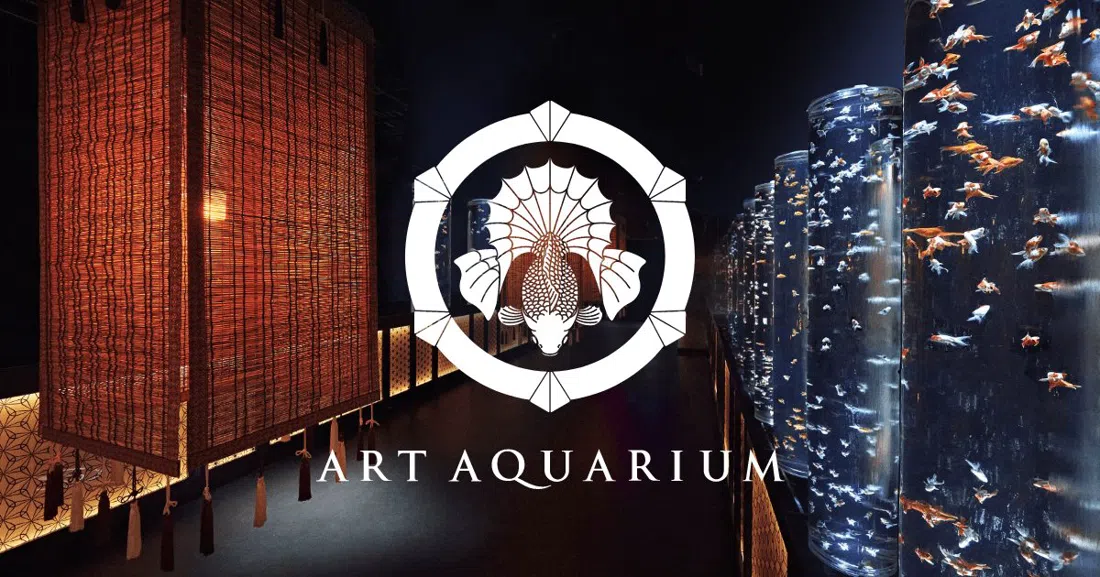
Art Aquarium Museum GINZA occupies the 8th floor of the Ginza Mitsukoshi New Building, connected to the station below, and has been permanent since May 2022, with seasonal re-dressings such as 'Super Cherry Blossoms' in spring. Around ¥2,500 adult, and timed tickets are worth it in peak season. It is the Japanese counter-tradition to pure projection work, with lighting design, sound and scent built around living creatures rather than screens. Be clear with yourself before you buy: these are live goldfish in designed tanks under theatrical lighting, and plenty of visitors are not comfortable with that. If that is you, skip it rather than argue with it on the way out. It is also dark, narrow and genuinely crowded at weekends, which makes it a poor fit for a group of more than six.
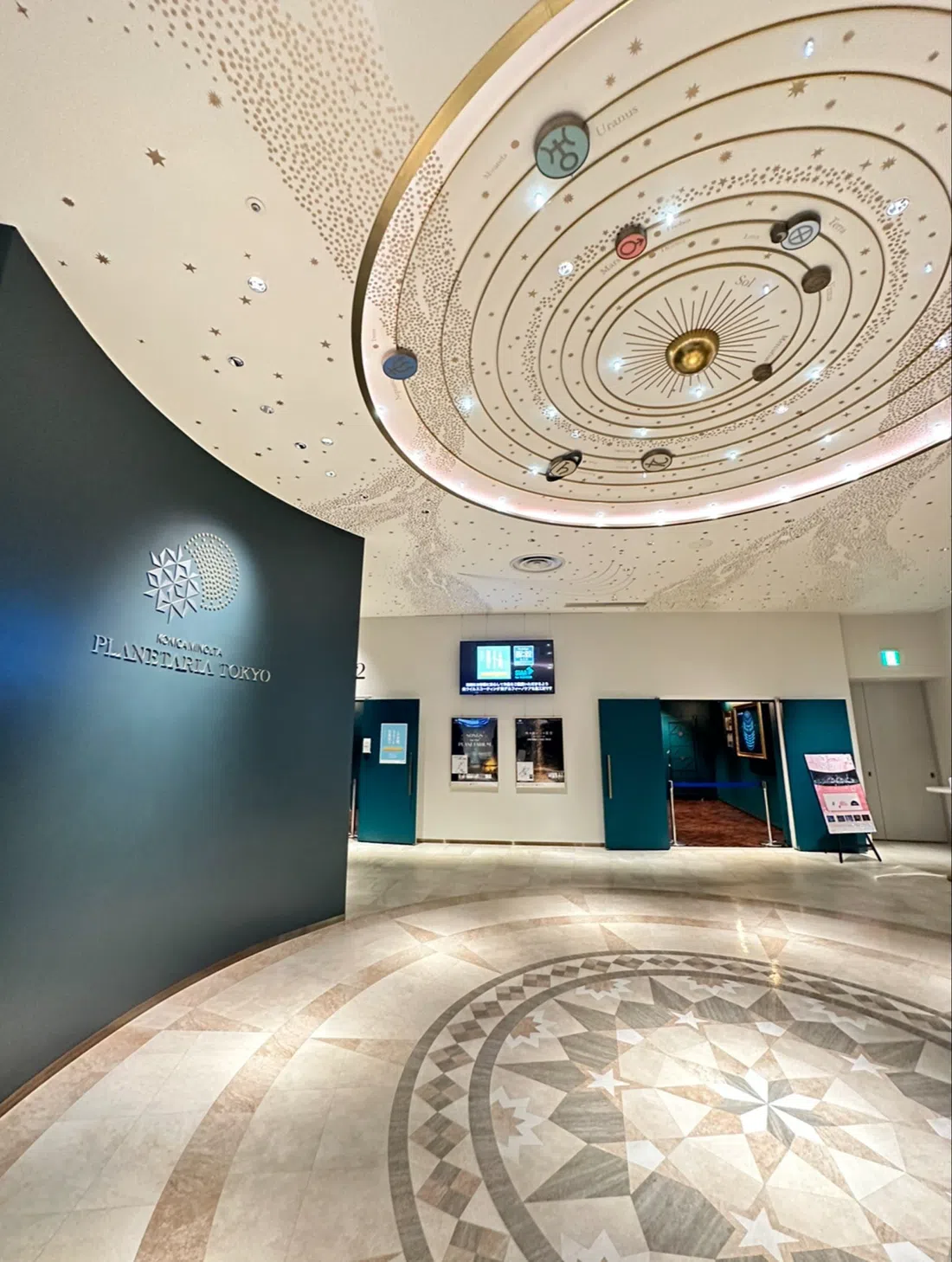
Konica Minolta Planetaria TOKYO is the format everyone overlooks: a commercial fulldome art house rather than a school-trip planetarium, ten minutes' walk from Ginza, with a cafe and shop on site. Shows cost roughly ¥1,600 to ¥2,600, run to fixed showtimes with allocated seating, and the larger dome seats 170, so a block booking in advance is the sensible move for a group. The 2026 programme has included a Monet immersive piece and a summer yokai show. One hard practical point: programmes are largely Japanese-narrated, with multilingual audio on some titles only, so confirm the language before booking seats for anyone who does not read or follow Japanese.
Groups, teenagers and the workshop behind the spectacle
RED° TOKYO TOWER sits inside Tokyo Tower and deserves an honest label: this is digital entertainment, not art, and nobody should arrive expecting teamLab. It earns a place here because it is the largest facility of its kind in Japan, it solves the what-do-the-teenagers-do problem in one stop, and after the free projection mapping it is the best large-group venue on this list. Unlimited-play day passes run roughly ¥2,500 to ¥4,000, there is no timed entry, and there are twenty-odd competitive attractions. A VR and MX4D reverse-bungee ride was added in late 2025. The place was built for parties and corporate outings, and it behaves like it.
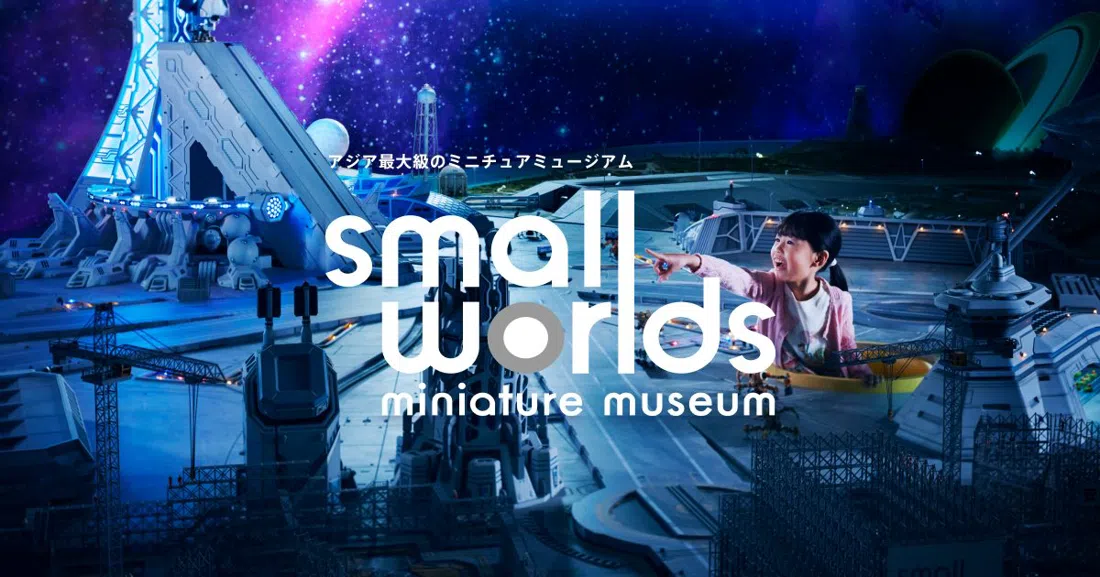
SMALL WORLDS Miniature Museum (Ariake) is the sideways pick: Asia's largest miniature museum, open since July 2020, where the immersion comes from scale and engineering rather than projection. It is the same instinct for building a total world, executed in resin and LEDs. Around ¥2,700 adult, no timed entry, a large floorplate that absorbs groups, and a paid service that 3D-scans visitors and installs a miniature of you permanently in the exhibit, which is a better shared souvenir than any photo. It fills the Toyosu and Ariake half-day alongside teamLab Planets.
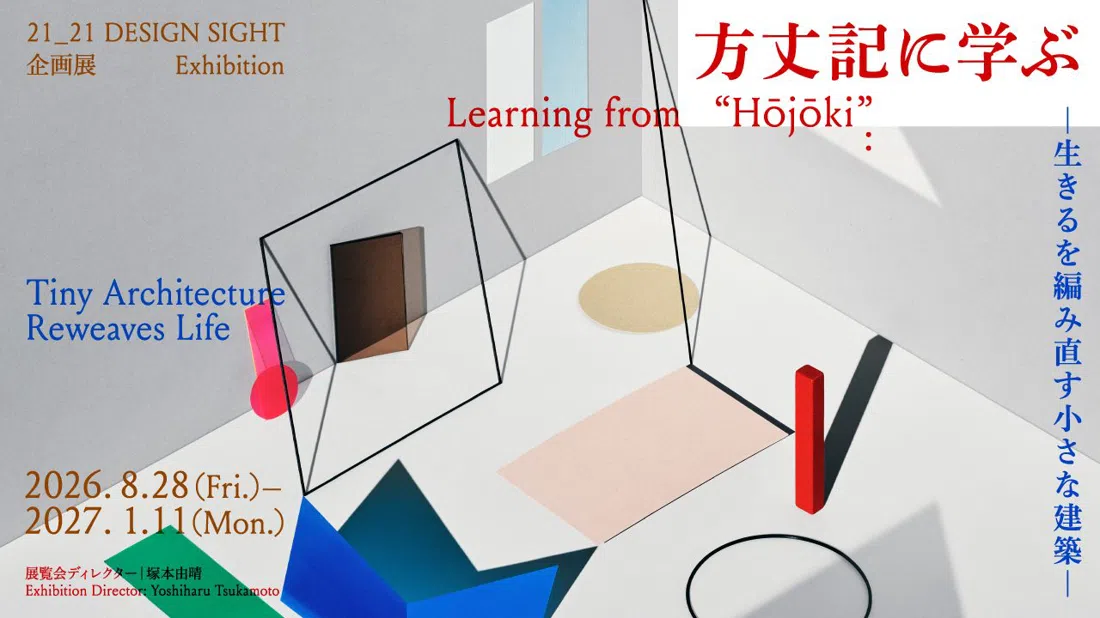
21_21 DESIGN SIGHT (Tokyo Midtown, Roppongi) is the least digital entry here, and it reads best as the workshop behind the spectacle. Issey Miyake founded it with Taku Satoh and Naoto Fukasawa, and it is where Japan's installation designers test ideas years before they surface in the big immersive shows. Around ¥1,400, no reservation, pay at the desk, which is the simplest admission of any venue on this list. The current exhibition runs 28 August 2026 to 11 January 2027. Note one closure: the whole complex shuts for scheduled power maintenance from 21 to 23 November 2026.
Practical notes
Get an IC card at the airport and stop thinking about fares. The awkward link is the Yurikamome line out to Toyosu and Ariake for teamLab Planets and SMALL WORLDS, so plan those two together or you will ride it twice for nothing. Borderless, Mori Art Museum, 21_21 DESIGN SIGHT and RED° TOKYO TOWER all cluster around the Hibiya line through Roppongi and Kamiyachō, and Ginza Sony Park, Art Aquarium and the fulldome sit within a fifteen-minute walk of each other. Night & Light and ICC are both a short walk from Shinjuku, which makes for an easy free-then-serious evening.
Cards work everywhere that sells a ticket, but carry ¥2,000 to ¥3,000 in coins and small notes for coin lockers, vending machines and the smaller cafes. Book the timed venues in this order of urgency: Yayoi Kusama Museum the day its monthly window opens, then Borderless, then Planets, then anything with a live performance element. Weekday mornings are the difference between a room you can stand still in and a room you shuffle through.
On budget: two ticketed immersive museums, one fulldome show and the free programme come to roughly ¥10,000 to ¥13,000 a head for a full weekend, which is modest against what the same days cost in hotels. Rooms in Ginza and Roppongi put most of this within walking distance of breakfast, and you can compare rates on our Tokyo hotel search. Verify the dates before you travel. Half the venues here run rolling programmes, three have published closure windows in autumn 2026, and one of the biggest closes for good at the end of 2027.