The Tokyo issue
Eating Late in Tokyo's Kagurazaka Lanes
A plan for Kagurazaka after dark, worked out slope by slope: the soba closes at eight, and one counter bar is still pouring at three in the morning.
By Emi Sato-DoyleOne dish, one counter, from Toyosu to the back streets
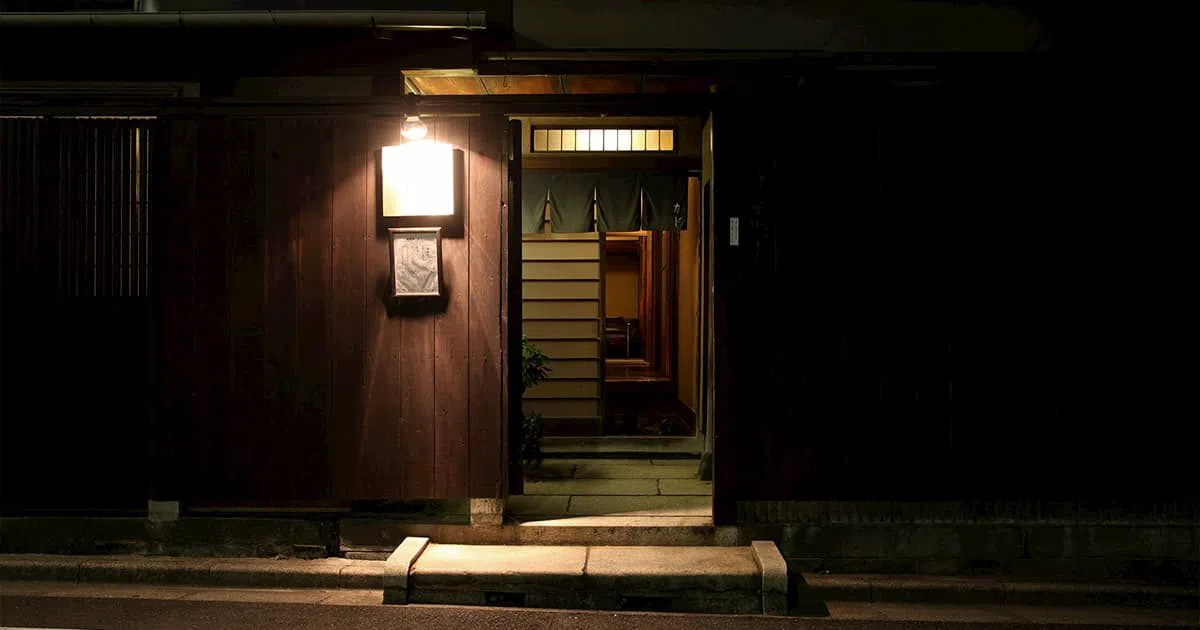
Kagurazaka climbs away from Iidabashi as one straight shopping slope, and almost nothing worth your evening happens on it. The evening is in the lanes off it: small dark stone underfoot, black wooden fences, a single lamp over a door with no English on it, and a sliding screen that leaks thirty seconds of noise into the alley before it shuts again. Walk up the hill at seven, eat, and keep going. A few of these rooms are still pouring at three in the morning.
Getting your bearings on the hill
The geography is simple and worth fixing in your head before you arrive. Iidabashi station sits at the foot of the slope, served by the JR Chuo-Sobu line and by the Tozai, Yurakucho, Namboku and Oedo subway lines. Kagurazaka station sits at the top, on the Tozai line, and Ushigome-Kagurazaka on the Oedo line covers the far side. Bottom to top is about ten unhurried minutes, and the whole area you will actually use is perhaps four hundred metres long.
Everything interesting branches off that main street at right angles. The alleys narrow to the width of two people, turn, and open into small paved courtyards with three doors on them. Signage is minimal by design. You will walk past the best restaurant in the district without noticing it, which is why the phone number matters more than the address. In Kagurazaka, booking ahead is how you get in at all. Small counters here hold eight to twelve people and fill weeks out.
The seams of the evening will catch you if you let them. Several of the district's best rooms close at eight or shut two days a week, while the bars do not open until eight and run to two or three. If you arrive at nine expecting to browse, you will find a quiet hill and a queue at the pork bun counter. Plan the early half and the late half as two separate bookings. For wider planning across the rest of the city, use the Tokyo guide.
Plan your Tokyo trip
Live prices from our booking partners.
Free cancellation on many rooms. We may earn a commission when you book.
Coffee, sweets and the shrine at the top
If you are staying nearby, the daylight version of Kagurazaka is a short, pleasant loop that ends uphill.
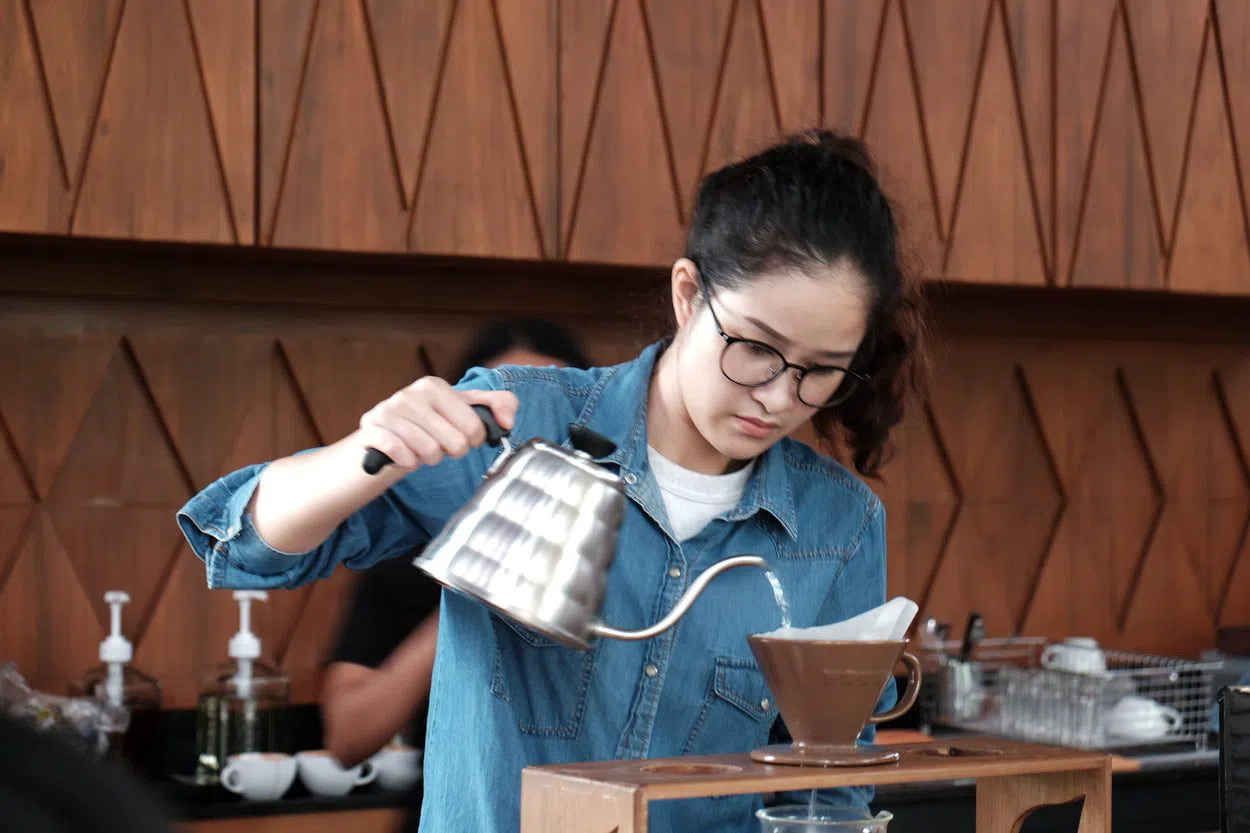
Akha Ama Coffee Kagurazaka (Kagurazaka, Shinjuku-ku) is the first overseas branch of a northern Thai roaster, open 8:00 to 19:00 daily, and it is a daytime room only, so it will not help you after dark. Expect ¥600 to ¥1,000 for a filter coffee in a compact space that seats three or four of you comfortably and starts to feel tight beyond that. It has taken over the slot in most people's routes that Mojo Coffee Kagurazaka used to hold; Mojo has permanently closed, and older guides still send readers to that address.
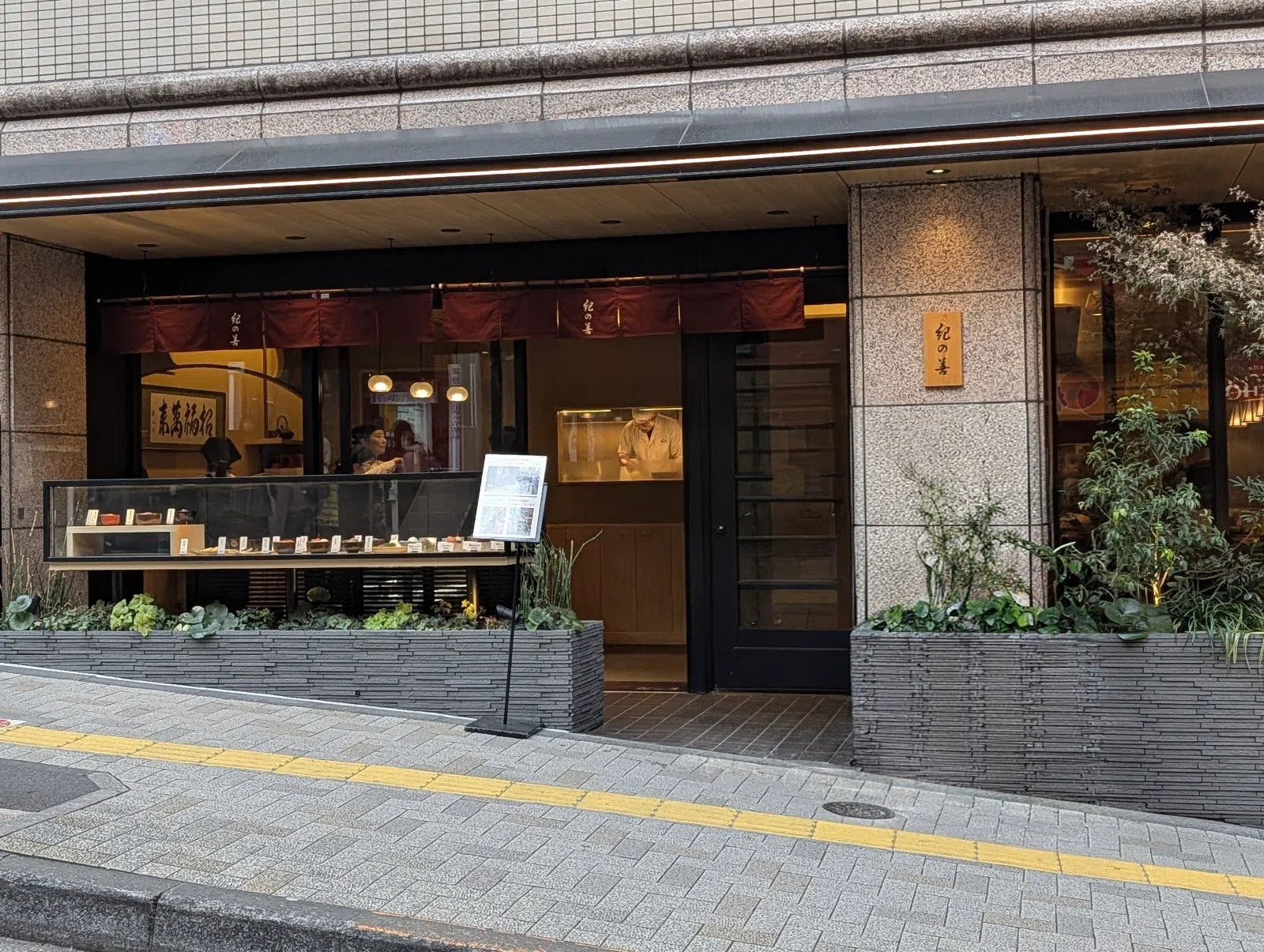
Kinozen (Kagurazaka shopping street) is a wagashi tearoom with a genuine comeback story. It closed in 2022, was mourned locally, and reopened on 18 July 2025 in the shopping street, with the matcha bavarois back on the list. That is the thing to order: cold, set just firm enough to hold the spoon's edge, bitter under the sweetness, about ¥900 to ¥1,500 with tea. The room is small and the tables are few, so two to four people is the working size and weekends mean a wait. If you find a listing calling it permanently closed, that listing is out of date.
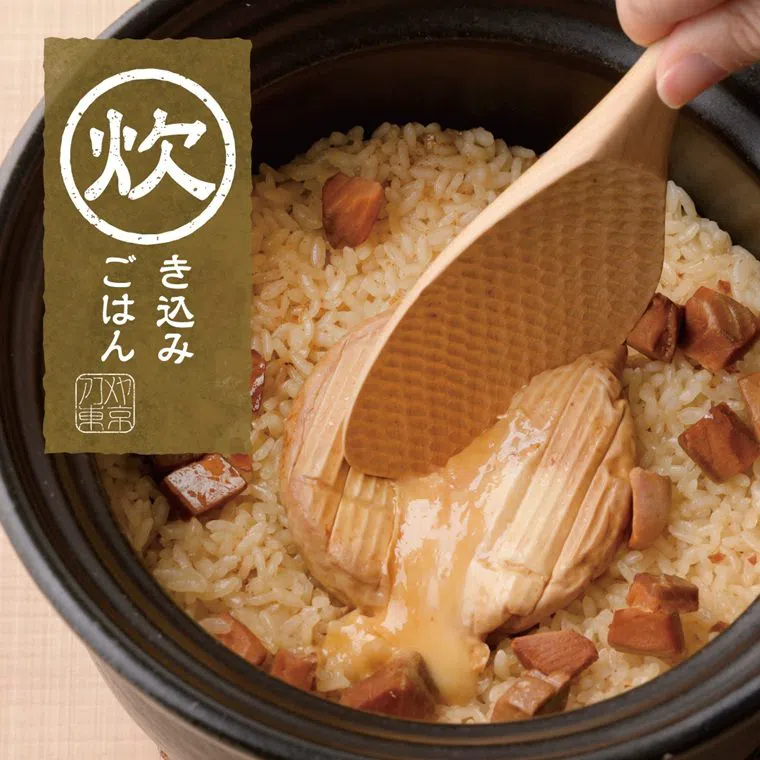
AKOMEYA TOKYO in la kagū (lower Kagurazaka) is the big open-plan alternative when the small rooms are full: retail floors plus an in-house café and kitchen, no door policy, any group size, ¥1,500 to ¥3,000 for something in the café. Use the current name when you search or ask directions, because the building traded as la kagu until AKOMEYA took it over, and dead-brand directions still circulate.
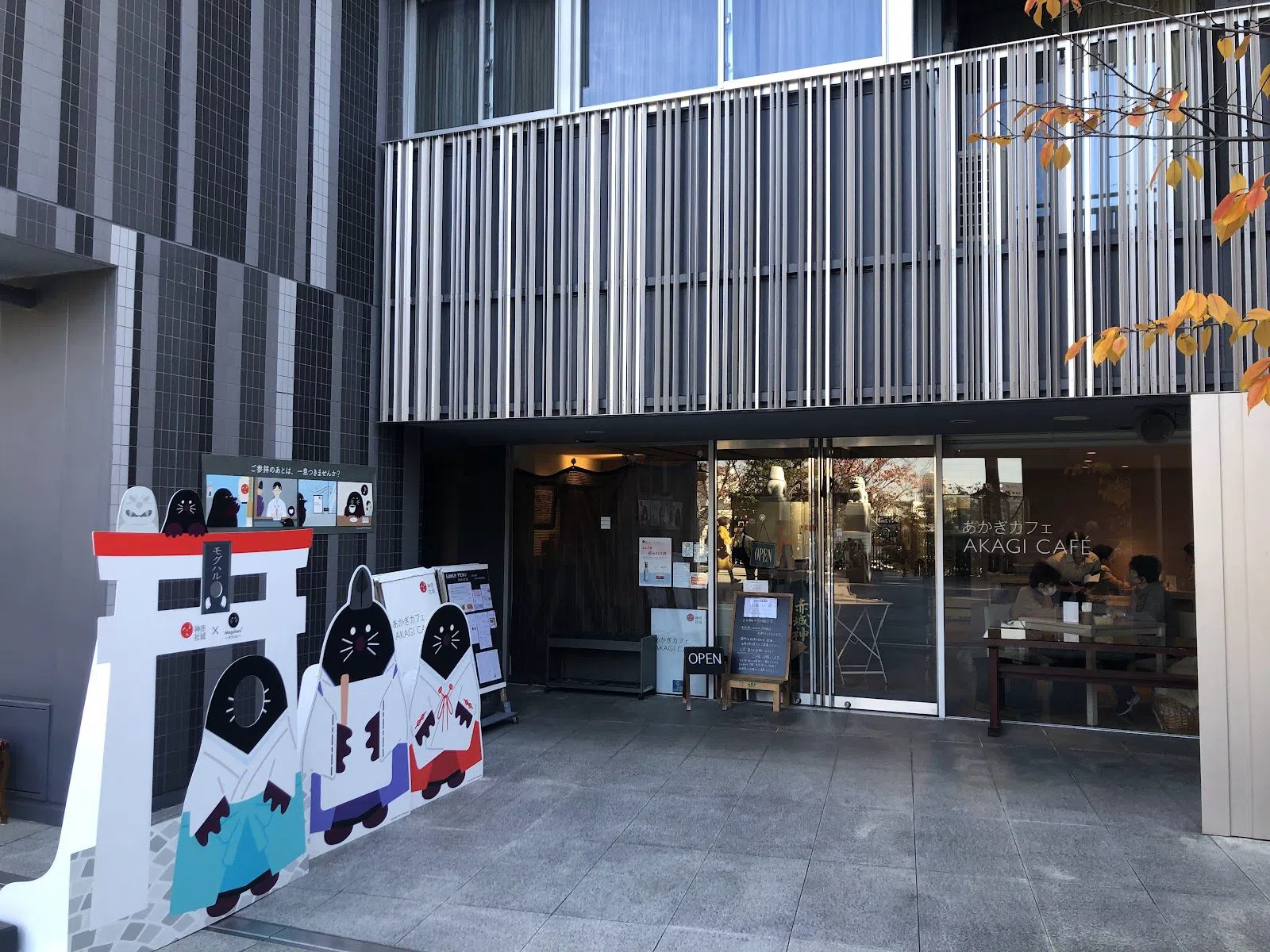
End uphill at Akagi Shrine and Akagi Café (Kagurazaka-ue). The shrine was founded in 1300 and rebuilt by Kengo Kuma in 2010, which makes it the glass-and-timber counterweight to the wooden lanes below. Grounds are free and open; the café seats forty, so a group fits easily, but it closes on Tuesdays and on the second and fourth Monday, and that catches people out.
An early dinner before the bars open
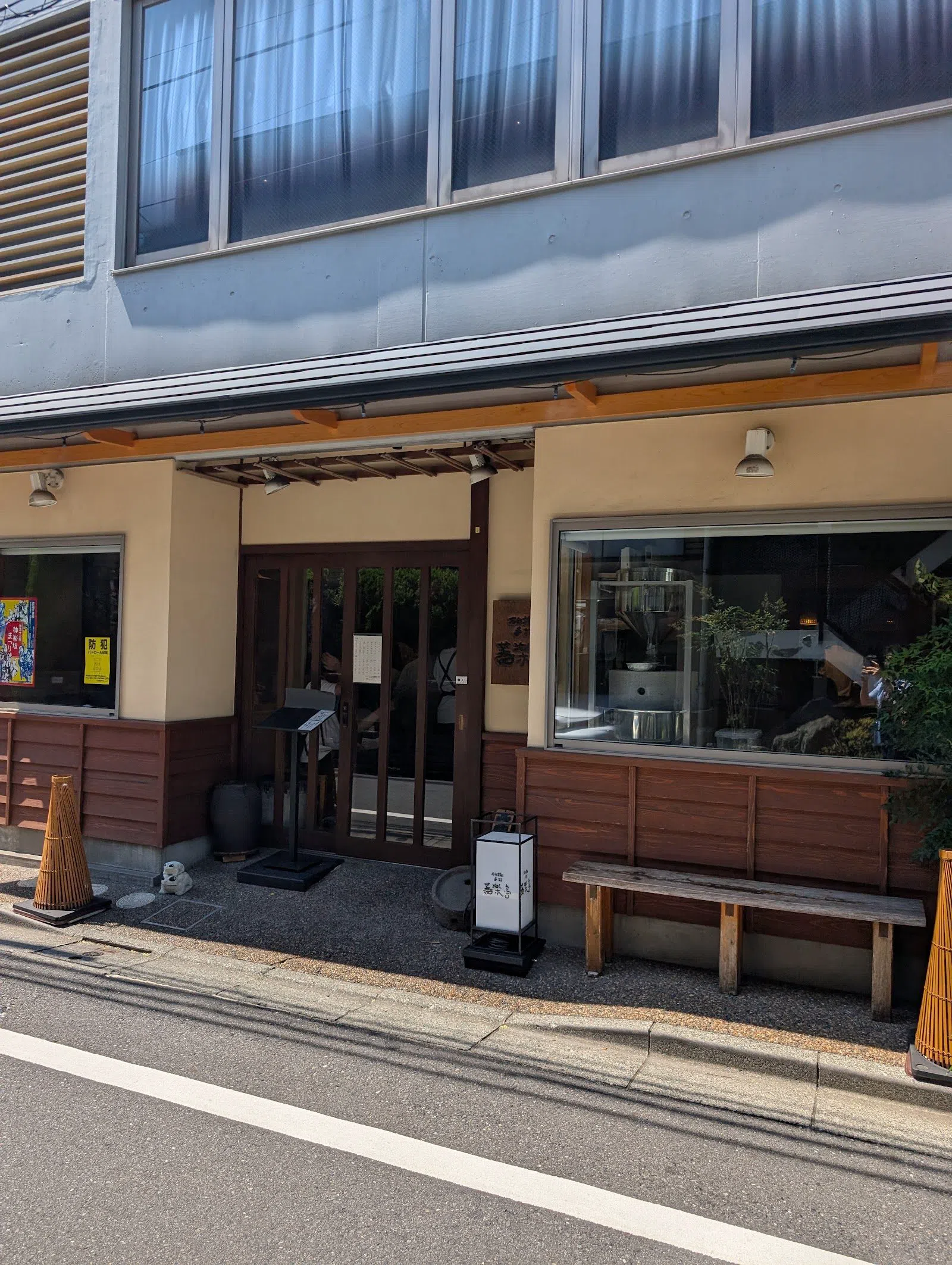
Kyorakutei (Kagurazaka) is a soba shop with a Bib Gourmand for a decade running, milling its own buckwheat in-house, and it closes at 20:00 and shuts Sunday and Monday. Read that twice, because it is the single most common wasted walk in the district. This is an early-evening stop before the bars, never a late one. The room is small and the turnover is fast; queues form before opening. Pairs and threes only, since there are no group bookings, and ¥1,500 to ¥3,500 covers seiro soba and a beer. Assume the menu is Japanese; the ordering is simple enough that this rarely matters.
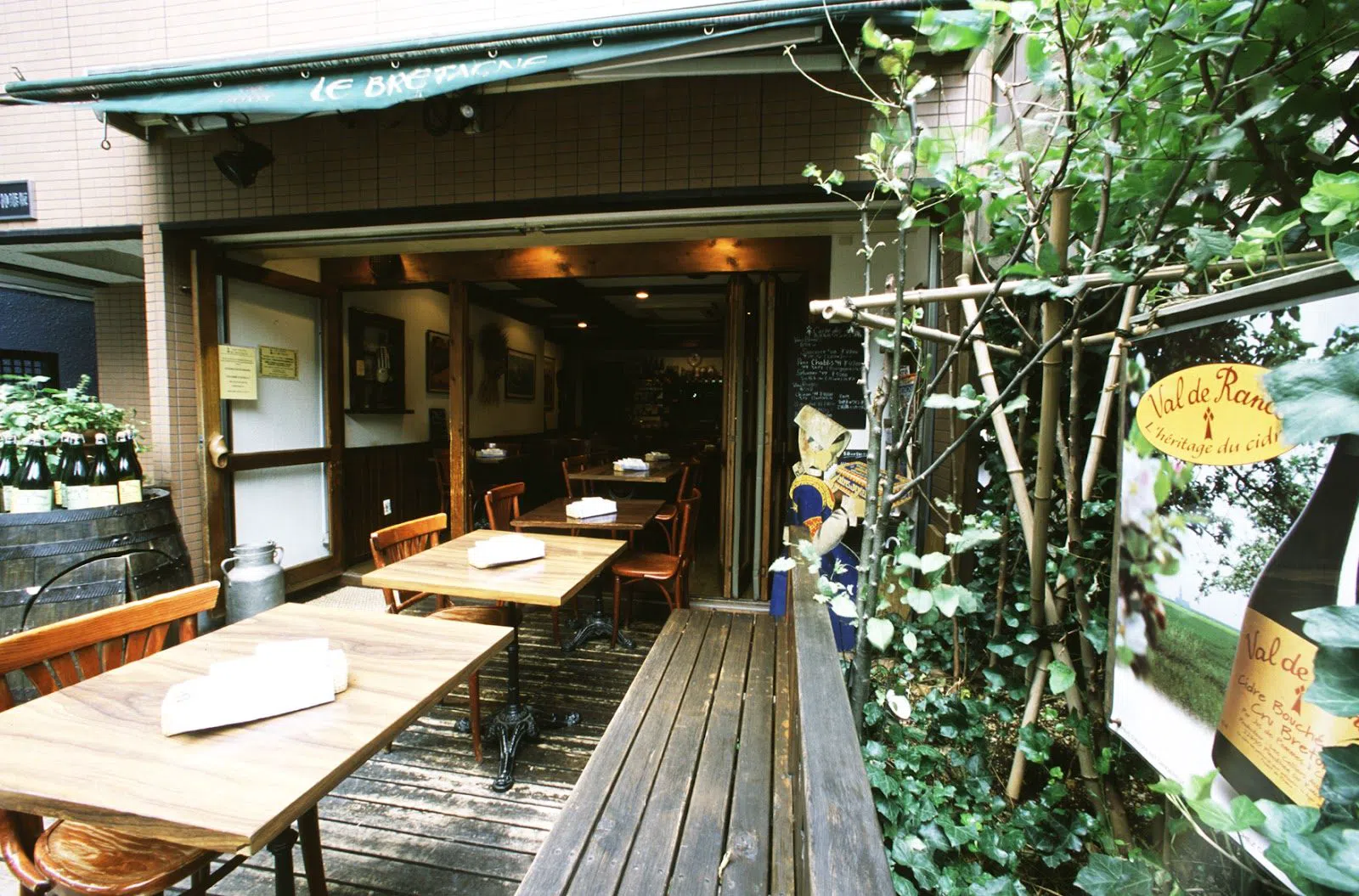
Café-Crêperie Le Bretagne Kagurazaka (Kagurazaka) has been open since 1996 as Japan's first crêperie, and it is the clearest surviving evidence of the French community that settled around this hill. It serves until 22:00 daily, which puts it comfortably inside the evening rather than the afternoon. Order a savoury buckwheat galette, ¥1,400 to ¥2,200, with cider in a bowl-shaped cup. There is full table service across multiple rooms, so groups of six to eight are genuinely comfortable here, which is rare in Kagurazaka. English is far likelier to be understood in this room than in the counters uphill, though I would not promise you a printed English menu.
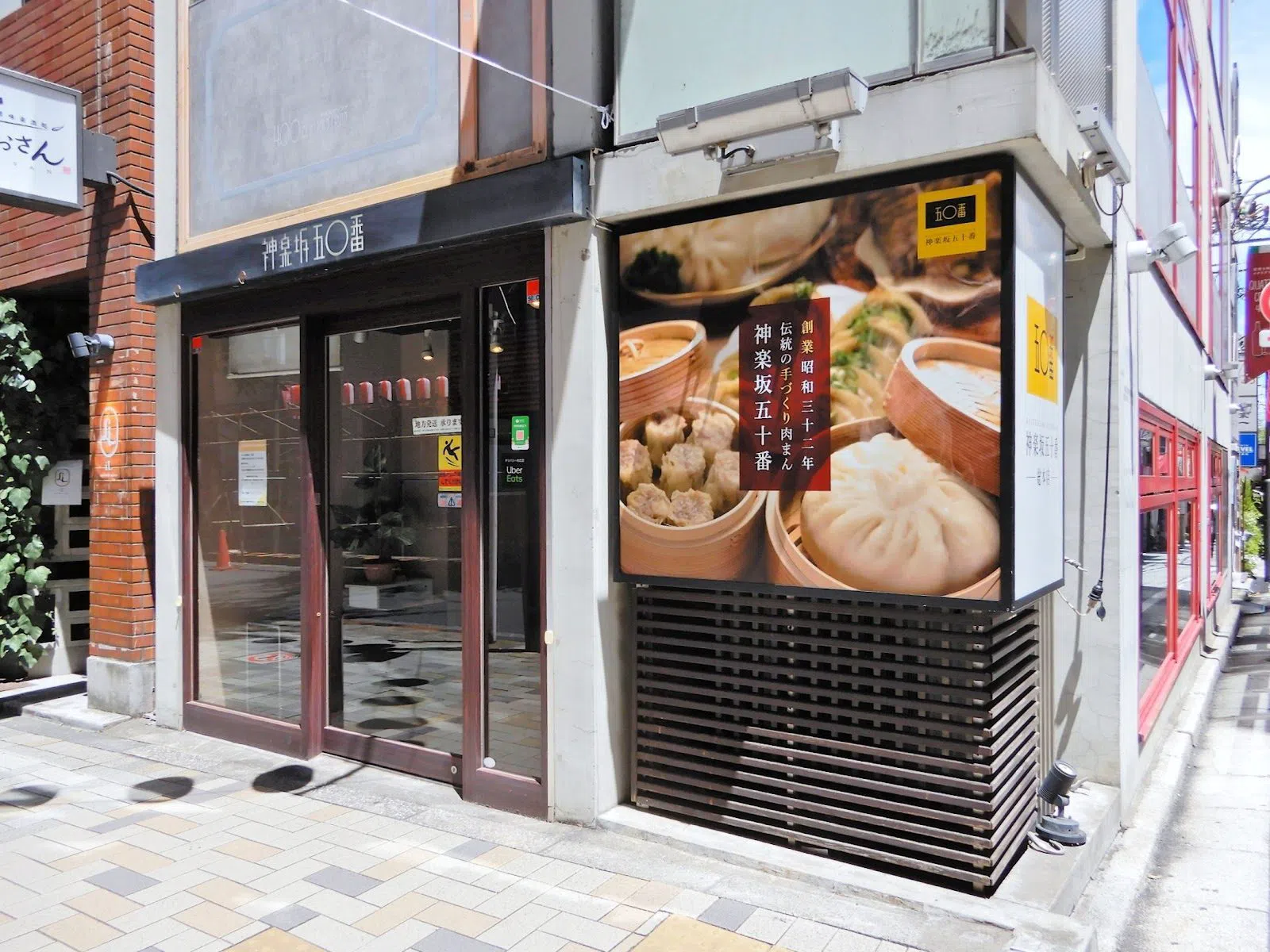
Ganso Gojuban Kagurazaka Honten (foot of the slope) has been steaming pork buns since 1957 and stays open to 23:00 on weekdays, which makes it the default late snack on the walk between bars. A nikuman is ¥300 to ¥600, handed over hot in paper, and the first bite releases enough steam to fog your glasses. It is a takeaway counter, so group size is irrelevant and the queue moves quickly. This is the thing to eat standing up at eleven at night when the kitchens have stopped and the bar has no food.
The counters worth booking weeks ahead
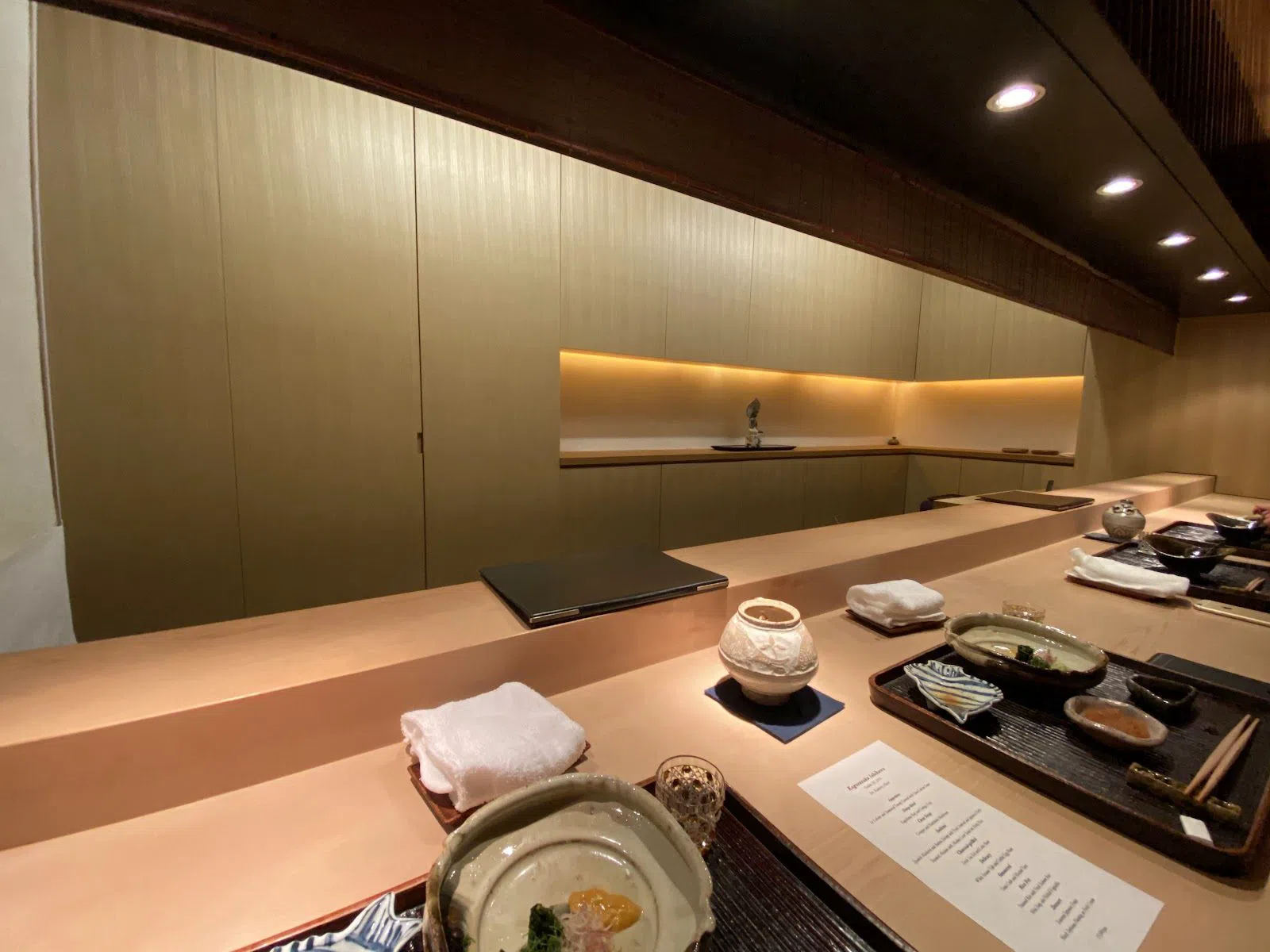
Kagurazaka Ishikawa (Kagurazaka) holds three Michelin stars and has done for eighteen consecutive years, retained in the 2026 guide. It is the quality ceiling of the district and it is hidden behind a door most people walk straight past: no window, no menu outside, a short stone path. The experience is counter-led; a private room exists but its capacity is tiny, so two to four is the sweet spot and reservations are essential. Budget ¥40,000 to ¥50,000 per person. This is not a room you improvise your way into, and the counter asks for your attention for the full length of the meal.
Kohaku (Kagurazaka) is the reason a kaiseki restaurant belongs in a late-night piece at all: it serves until midnight, Tuesday to Saturday, which at this level is close to unheard of. It holds two stars in the 2026 Michelin Guide, two rather than three, whatever some aggregator listings tell you. There is a counter plus private rooms, so a small group can be accommodated in a room, but book weeks out and treat walk-ins as impossible. ¥30,000 to ¥45,000 per person.
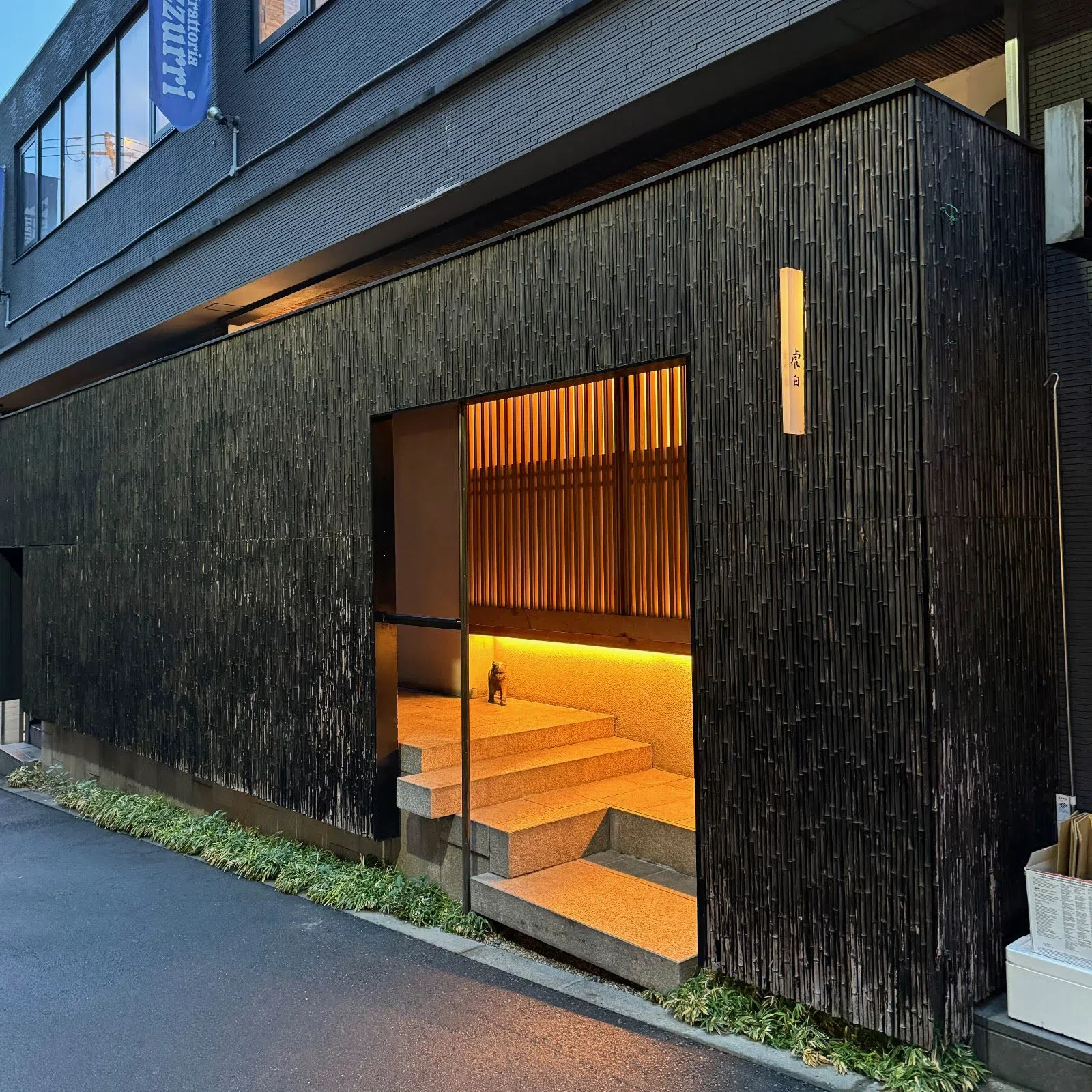
Yakitori SANKA (Kagurazaka) is the serious mid-price late dinner: a Bib Gourmand in the 2023 through 2026 guides, twelve seats in total, open to 23:00. Skewers come one at a time across the counter in a fixed order, and the pacing carries the meal: you eat, you wait, you eat. Parties of three or more must phone the restaurant directly on 03-6265-0108; walk-ins are unrealistic at twelve seats. Note the cancellation policy before you commit, because it is strict: 100% the day before. ¥12,000 to ¥15,000 per person.
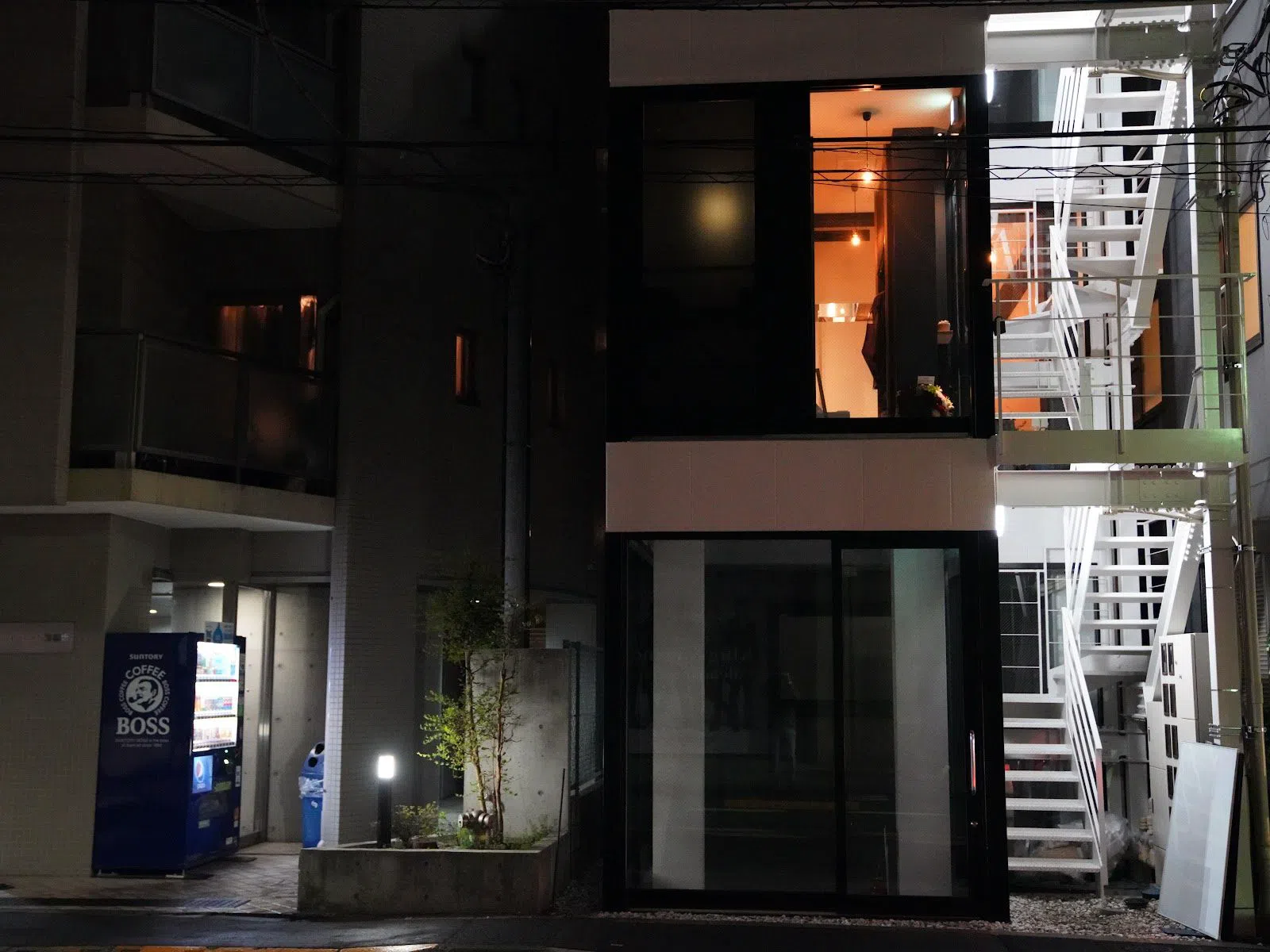
Dinner a group can actually book
Kagurazaka Kado (Kagurazaka) is the single best hidden-lane dinner here that a foreign group can realistically book, an old-house izakaya with two quite different rooms. The doma standing bar runs 15:00 to 23:00 and suits twos and threes who want to lean on a counter with a bottle. The tatami zashiki private rooms open from 17:00 and are built for parties. Last orders are 22:30. Phone ahead on 03-3268-2410 for a group. Reckon on ¥4,000 to ¥7,000 per person with sake, and expect the menu to be Japanese; order by pointing at what the room is drinking.
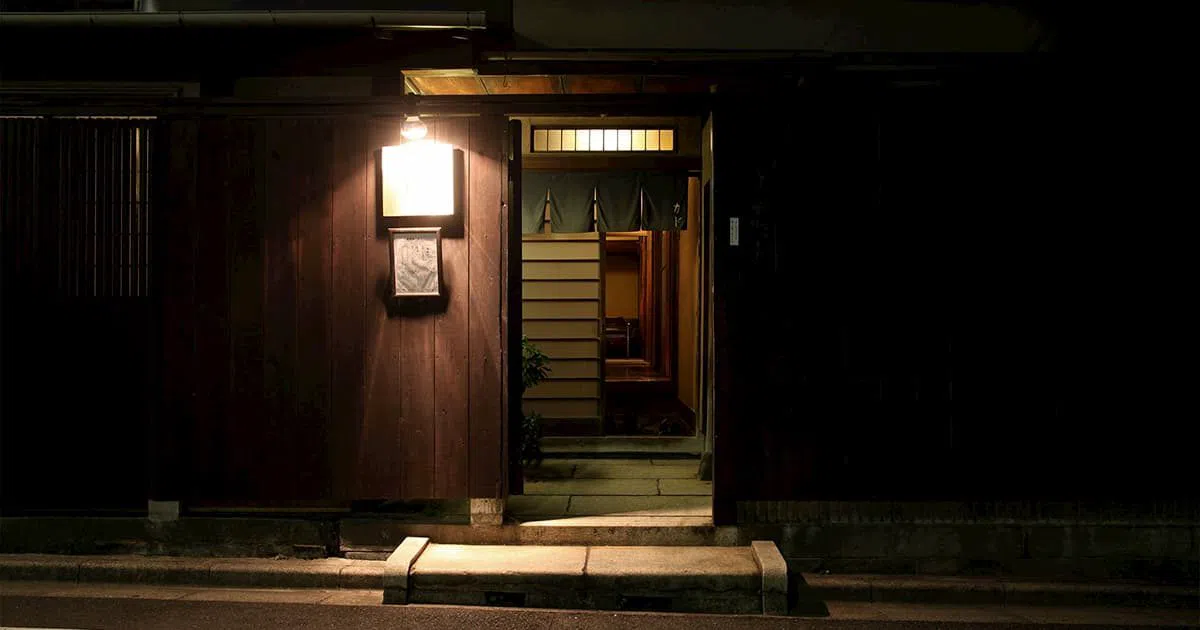
LUGDUNUM Bouchon Lyonnais (Kagurazaka) is the most group-friendly non-Japanese option in the lanes: proper table seating, dinner running to 23:30 with last orders at 22:30, which means it covers the late slot when the counters have closed. Book for six or more. It has been Michelin-listed for sixteen years as a Plate or recommended entry rather than a starred one, despite what some listings claim, and I would rather you arrived with the correct expectation. ¥8,000 to ¥12,000 per person for dinner.
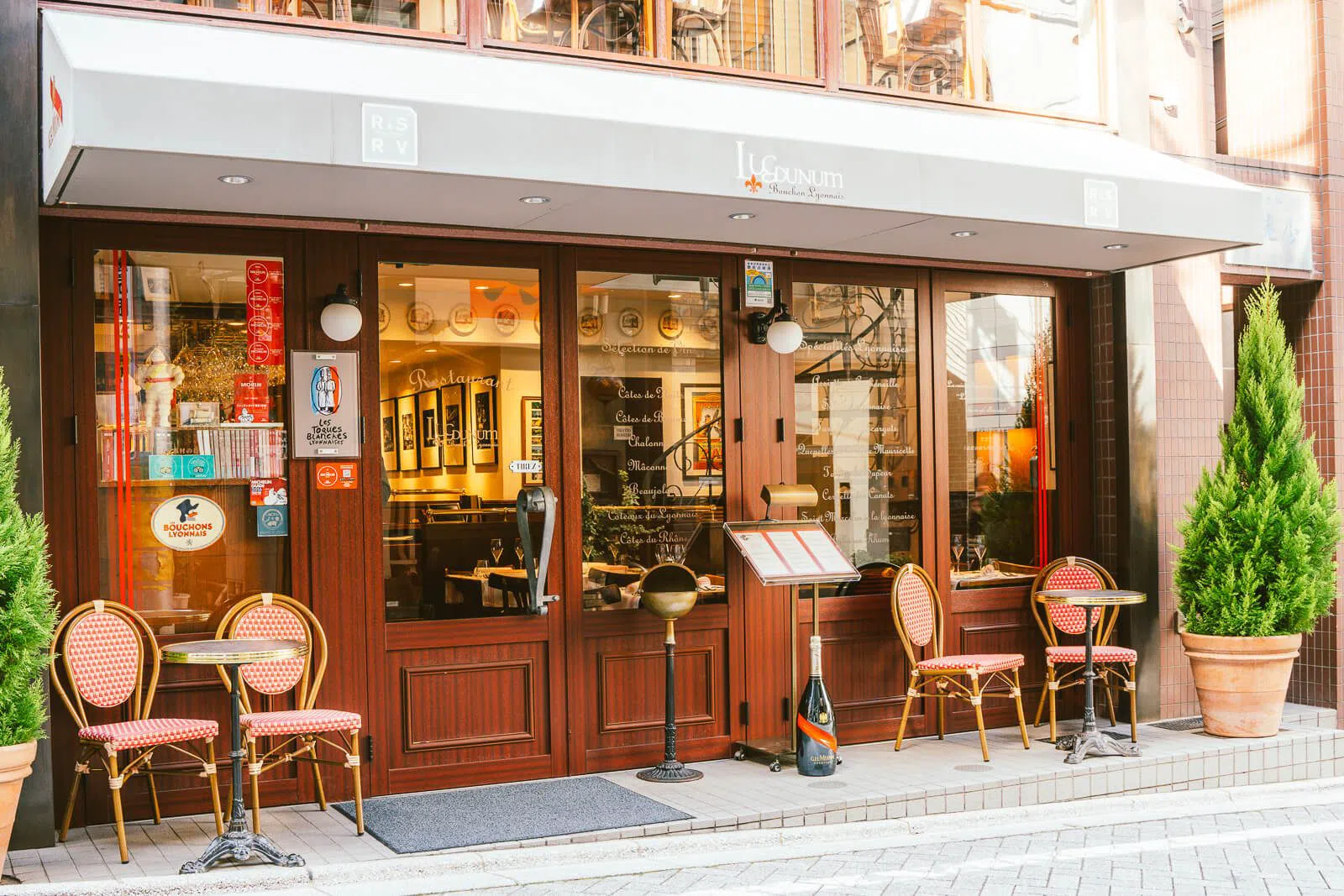
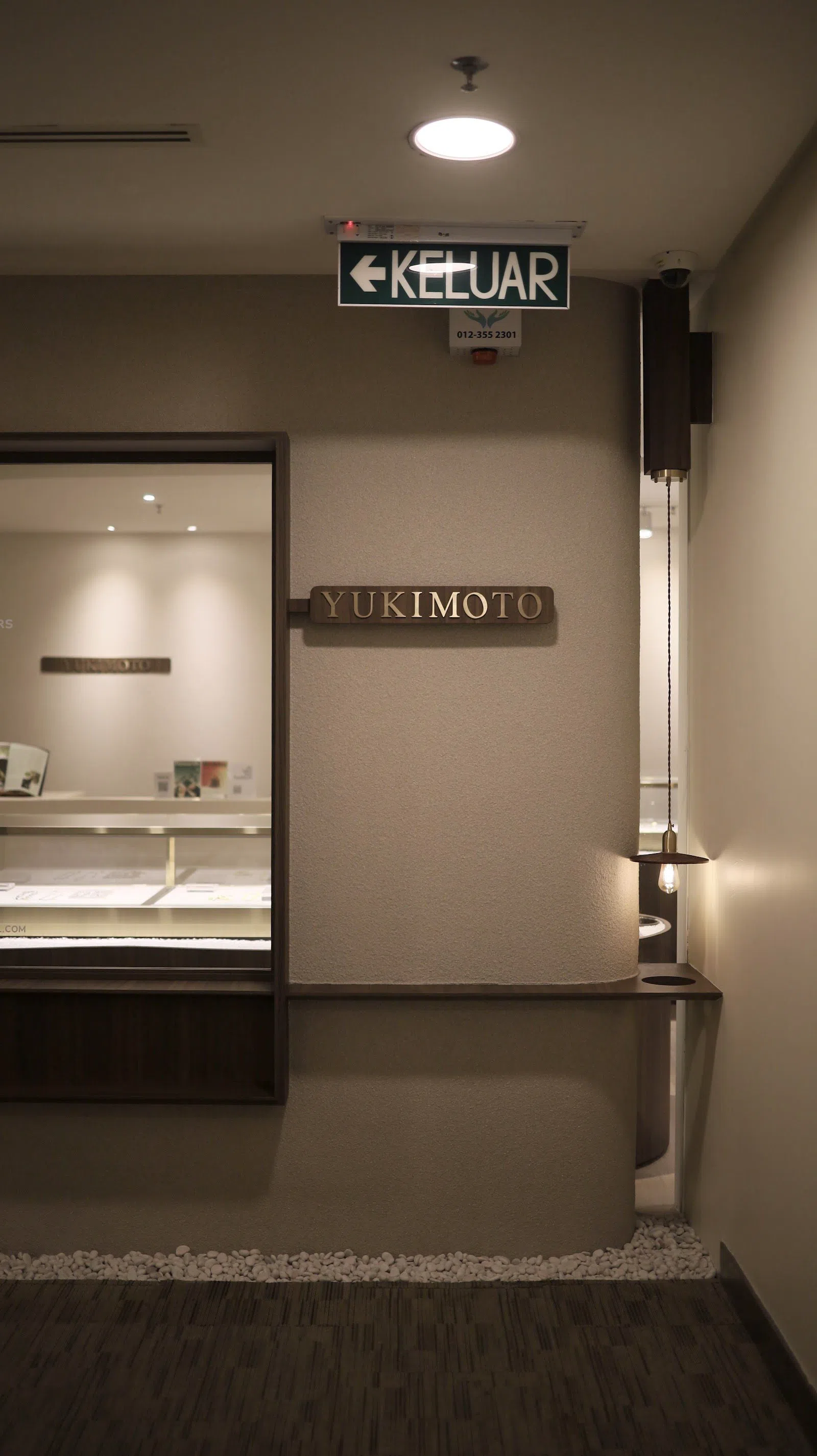
Yukimoto (Kagurazaka) is the district's ryotei, founded in 1948 and one of very few here that will host foreign guests for a full geisha evening. It is also, unexpectedly, the strongest group venue on this list: eight rooms and a forty-mat hall, taking anything from a single guest to a party of forty. The cost is ¥55,000 per person for parties of six or more, and it is worth being plain about what that buys: the performance, the room and the service, rather than simply the dinner. If you want the evening the district is famous for, this is where it actually happens, and it needs organising well in advance.
After midnight in the lanes
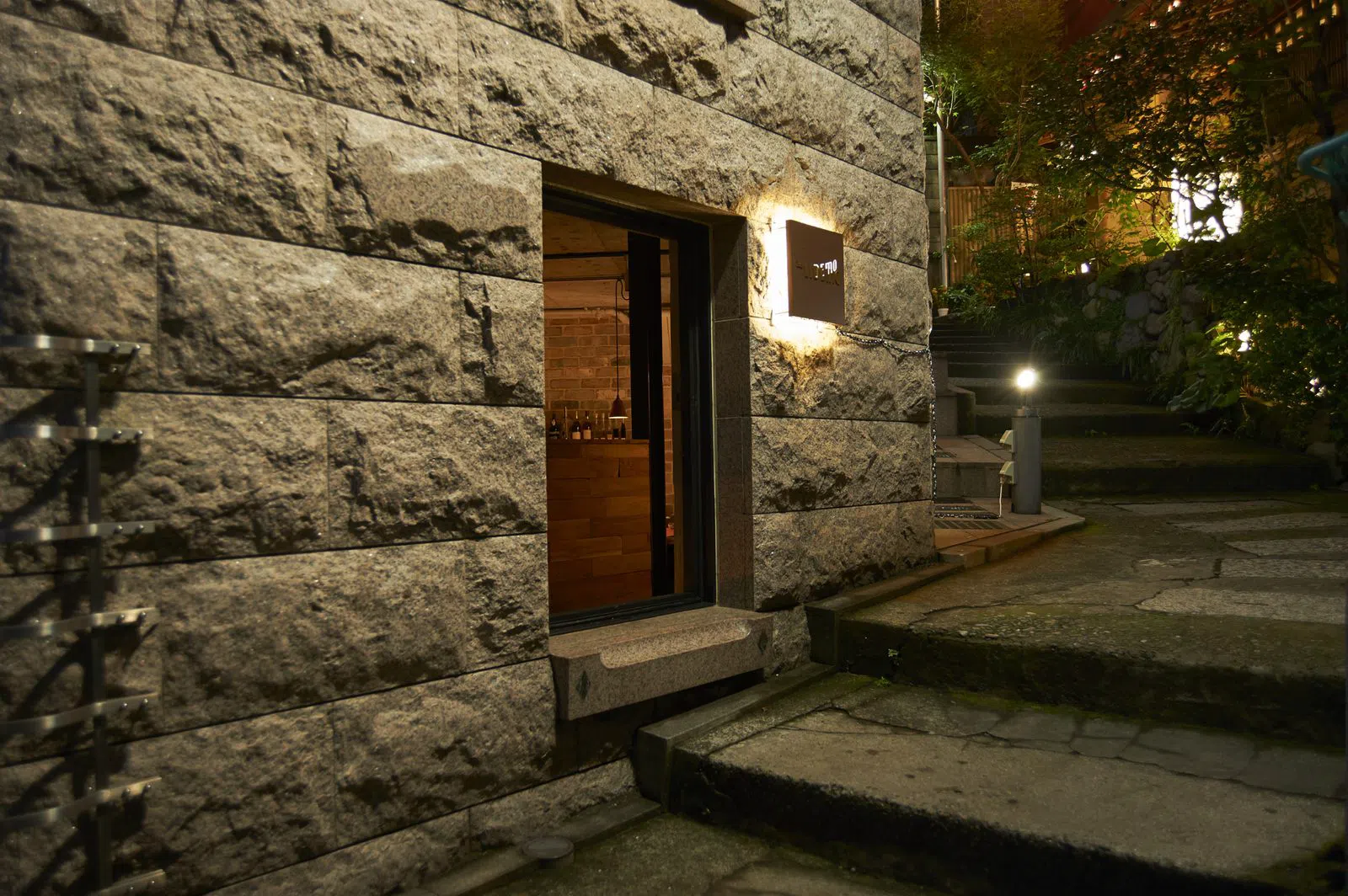
Bar Lidemo (Kagurazaka) is the genuine late anchor of the area, open to 27:00, three in the morning, with last entry at 26:00, seven days a week. It is tiny. Seven counter seats and one table for five, twelve people in the whole room, so five is the realistic maximum for a group and you should book the table rather than hope. The team is all women, and the pours lean to rum and seasonal-fruit cocktails; ask what fruit came in that week and let them build around it. ¥3,000 to ¥5,000 per person.
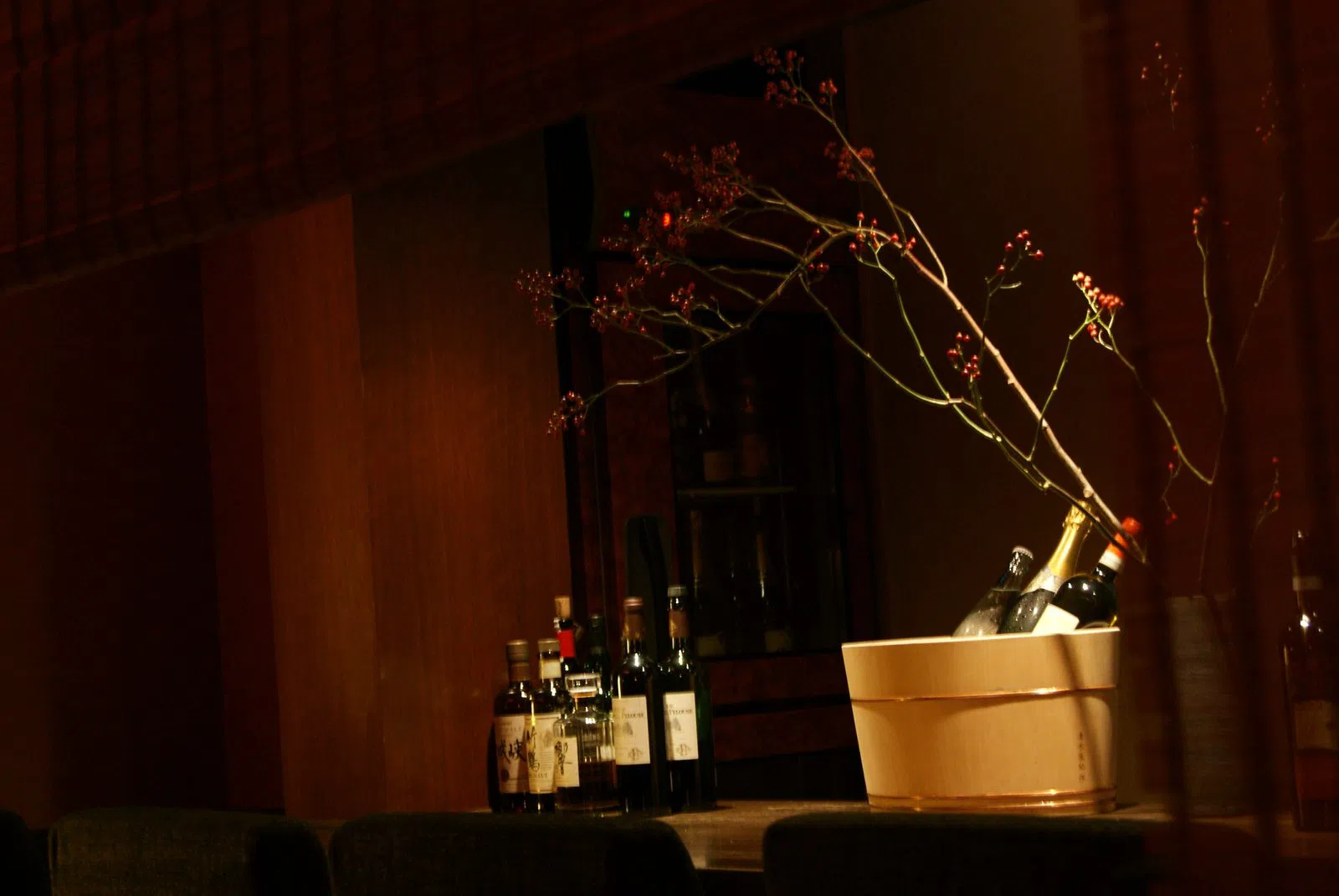
Chika (Kagurazaka) is run by a working Kagurazaka geisha and opens 20:00 to 02:00, closed Sundays. It is a counter-sized room, so couples and pairs; four people would fill it. The format is wine and conversation only, with no food served at all, so eat first and come afterwards. It is the closest thing in the district to being let into someone's front room.
Wine Bar Rinka (Kagurazaka) opens 18:00 to 02:00 and is genuinely hard to find, which is more or less the point. The intercom by the door is the giveaway that you have the right building; press it. Inside is a single small tatami room with counter and sofa seating, best for two to four, and you should call ahead for more than that. ¥5,000 to ¥8,000 per person. Because it opens at six, it doubles as the bridge between an early soba dinner and a two o'clock finish.
Practical notes
Iidabashi sits at the bottom, Kagurazaka at the top, Ushigome-Kagurazaka on the far side. Subway service stops around midnight to half past, so if you are staying at Bar Lidemo or Chika until they close you are leaving by taxi. There are ranks on the larger roads at either end of the slope, and it is worth having your hotel name written down in Japanese. For beds within walking distance of the hill, start with a Tokyo hotel search.
Carry cash. The larger restaurants and the retail floors take cards without difficulty, but small counters and standing bars are where cash still turns up as the only option, and convenience-store ATMs near the station are the reliable fallback at midnight.
Build the night in two halves: something that closes at 20:00 or 22:00, then something that opens at 20:00 and runs past two. Watch the fixed closures, which are Kyorakutei on Sunday and Monday, Chika on Sunday, and the Akagi café on Tuesdays and the second and fourth Monday.
A full evening runs from roughly ¥6,000 per person (soba, a pork bun, one bar) to ¥30,000 to ¥50,000 for a starred counter, and ¥55,000 per person for a geisha evening at the ryotei. The middle path, around ¥15,000 to ¥20,000, buys yakitori or an old-house izakaya dinner and two proper drinks afterwards, and it is the version of this walk I would recommend to most people.
Before you go
How late can you actually eat and drink in Kagurazaka?
Later than most of Tokyo's older districts. Kohaku serves kaiseki until midnight Tuesday to Saturday, Yakitori SANKA is open to 23:00, LUGDUNUM Bouchon Lyonnais takes last orders at 22:30 and closes at 23:30, and Ganso Gojuban sells pork buns to 23:00 on weekdays. Drinking goes later: Chika and Wine Bar Rinka to 02:00, Bar Lidemo to 03:00 with last entry at 02:00.
Do I need to reserve, and can I do it without speaking Japanese?
Reserve for anything with a counter. Kagurazaka Ishikawa and Kohaku need weeks of notice; Yakitori SANKA has twelve seats and wants a direct phone call on 03-6265-0108 for three or more; Kagurazaka Kado takes group bookings on 03-3268-2410. If phone Japanese is a barrier, ask your hotel's concierge to place the call. That is normal practice and it works. Check cancellation terms first: SANKA charges 100% the day before.
Is Kagurazaka workable for a group of six or more?
Yes, but only at four places. Yukimoto is the best of them, with eight rooms and a forty-mat hall that takes up to forty guests. Kagurazaka Kado's tatami zashiki rooms are built for parties from 17:00. LUGDUNUM Bouchon Lyonnais has proper table seating, and Le Bretagne is comfortable for six to eight. Everywhere else on this list holds twelve people or fewer in total, so a group of six simply will not fit.
How do I get home after the last train?
The subway from Iidabashi, Kagurazaka and Ushigome-Kagurazaka stops around midnight, so any night that ends at Bar Lidemo, Chika or Wine Bar Rinka ends in a taxi. Ranks sit on the larger roads at both ends of the slope. Have your hotel's name and address written in Japanese, and budget for the fare.
What should I do in Kagurazaka before the evening starts?
Walk uphill. Akha Ama Coffee opens at 8:00 and closes at 19:00; Kinozen has served its matcha bavarois in the shopping street since reopening on 18 July 2025; AKOMEYA TOKYO in la kagū has open retail floors and a café with no door policy. Finish at Akagi Shrine, founded in 1300 and rebuilt by Kengo Kuma in 2010. The grounds are free, but the café closes Tuesdays and the second and fourth Monday.